Skip to content



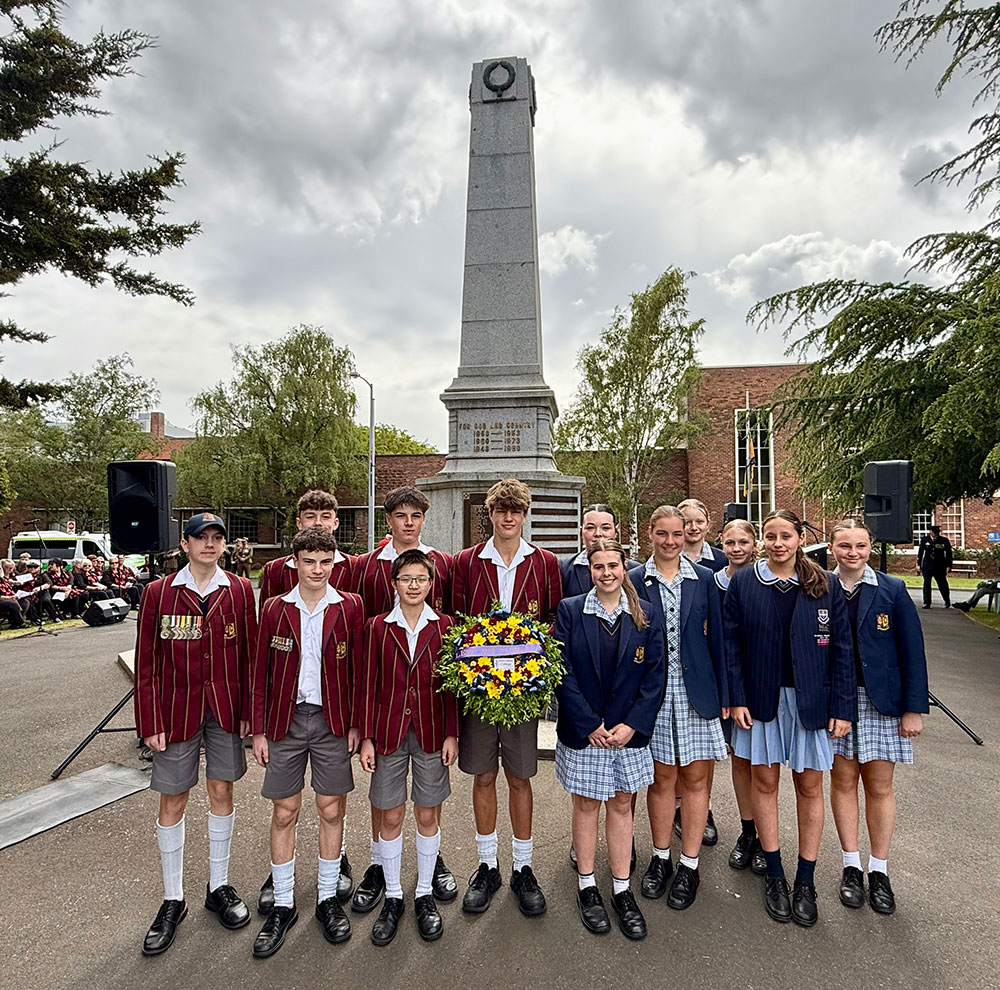
(from the Penquite Remembrance Day assembly)
World War One was supposed to be ‘the war to end all wars’, as it was so brutal and costly that people vowed that ‘never again’ should war be allowed to erupt. Yet, only 20 years later, World War Two began and resulted in far greater destruction and loss of life, and there have been hundreds of smaller conflicts since.
So why is peace so elusive?
Peace is more than the absence of violence and war. Peace is where groups and individuals get along, cooperate, share, treat each other kindly, and do favours for each other. If you look around the world you will see some countries are far more peaceful than others. But why?
Researchers at the University of Colombia in the US started a large research project to answer that question. They found that people had done plenty of research on things that can harm us, such as violence, war, and disease, but there was very little research done to identify the ingredients for peace.
They assembled a large team of researchers who examined every country in the world looking for the things that made countries peaceful, and they found over 70 factors that contributed to peace and stability. However, there were some factors that stood out more than others as key ingredients.
Humility – peaceful nations have a culture of being humble across the population as a whole, but most importantly in their leaders. One of the most brutal, but little heard of wars, was the War of the Triple Alliance, which occurred in the late 1860’s in South America. At that time Paraquay was ruled by Francisco Lopez, who by all accounts was an arrogant, megalomaniac dictator who yearned to become the Napoleon of Latin America. In short order he simultaneously plunged his small country into war against Argentina, Uruguay, and Brazil, with disastrous results. The Paraguayans lost over 40% of their land and 50% of their population, with over 90% of military-aged males being killed, all triggered by the egotistic and foolhardy aspirations of their leader.
People are listened to, and their opinions are valued – If people feel that their views and opinions are dismissed, resentment and frustration can build, which can boil over into violence. The root causes of the recent civil war in Syria can be traced back to minority groups who felt marginalised and poorly treated by the government. When they started protesting in the street, government forces responded with harsh crackdowns and by shooting live bullets into groups of unarmed protesters. The protesters responded by arming themselves and very quickly things escalated out of control into a full-scale civil war that engulfed the country for the next 14 years.
Co-operation and compromise – these are both key ingredients not only for peace, but also for a healthy, well-functioning democracy. The ability to work co-operatively with other people, and a willingness to compromise to reach mutually agreeable solutions, are cornerstones to positive, peaceful relationships between people and nations. The ‘my way or the highway’ approach often leads to resentment and anger, resulting in violence being seen as the only viable option for achieving change.
Justice and fairness – In peaceful countries the laws and rules are fair and reasonable, and they apply to everyone equally. If certain people or groups are seen to be breaking the law and getting away with it, people can lose trust in governing institutions and start to disregard the laws themselves.
Common overarching identity – while people in peaceful countries may have diverse beliefs, religions, ethnicities, and backgrounds, they all have one thing in common, – a strong national identity. Having a solid identity that connects a population can help avoid the ‘them and us’ mentality that divides people and breaks down social cohesion. In the African country of Rwanda in the 1990’s, division was stoked between the two main tribes, the Hutus and the Tutsis. What resulted was a horrific genocide where over 700,000 people were killed, all based on their tribal identity. Now in Rwanda it is heavily emphasised that all people identify as Rwandans, not by their tribal lineage. The old tribal identity cards are banned and national unity as Rwandans is the new normal.
There is one other factor that researchers found was an incredibly important ingredient for peace. It didn’t seem to matter how wealthy a country was, or whether it was a democracy or not, and it didn’t matter how many natural resources or different religions a country has. One of the strongest indicators of how peaceful a country will be is the level of gender equality in the society. The level of gender equality across education, healthcare, workplaces, and leadership is a crucial ingredient for peace, and a powerful factor in stable and harmonious societies.
We are lucky in Australia that we live in a relatively peaceful country with stable governance and robust institutions that hold society together. However, this didn’t just happen by chance. It is the result of a lot of good work by a lot of good people, and we need to be vigilant that we don’t take it for granted. As the saying goes, all that is needed for evil to flourish is for good people to do nothing.
So, as we go about our daily lives, I encourage you to embed the ingredients of peace in your thoughts, words, and behaviours.
Be humble.
Listen to, and value, other people’s opinions.
Be willing to cooperate and compromise.
Strive for justice and fairness.
Maintain a strong overarching identity that connects us to each other.
Establish and maintain equality across all aspects of society.
We can’t expect governments or organisations to do all this for us. It starts with us and how we go about our lives each day. If each of us embodies these ingredients for peace, then hopefully war and violence will become distant memories.
Mark Hassell
Head of Experiential Learning