Skip to content



NEWS EDITIONS
Select a newsletter below:

Term 2 Week 4 – Friday 29 May 2026
STRONG GLOBAL PARTNERSHIPS
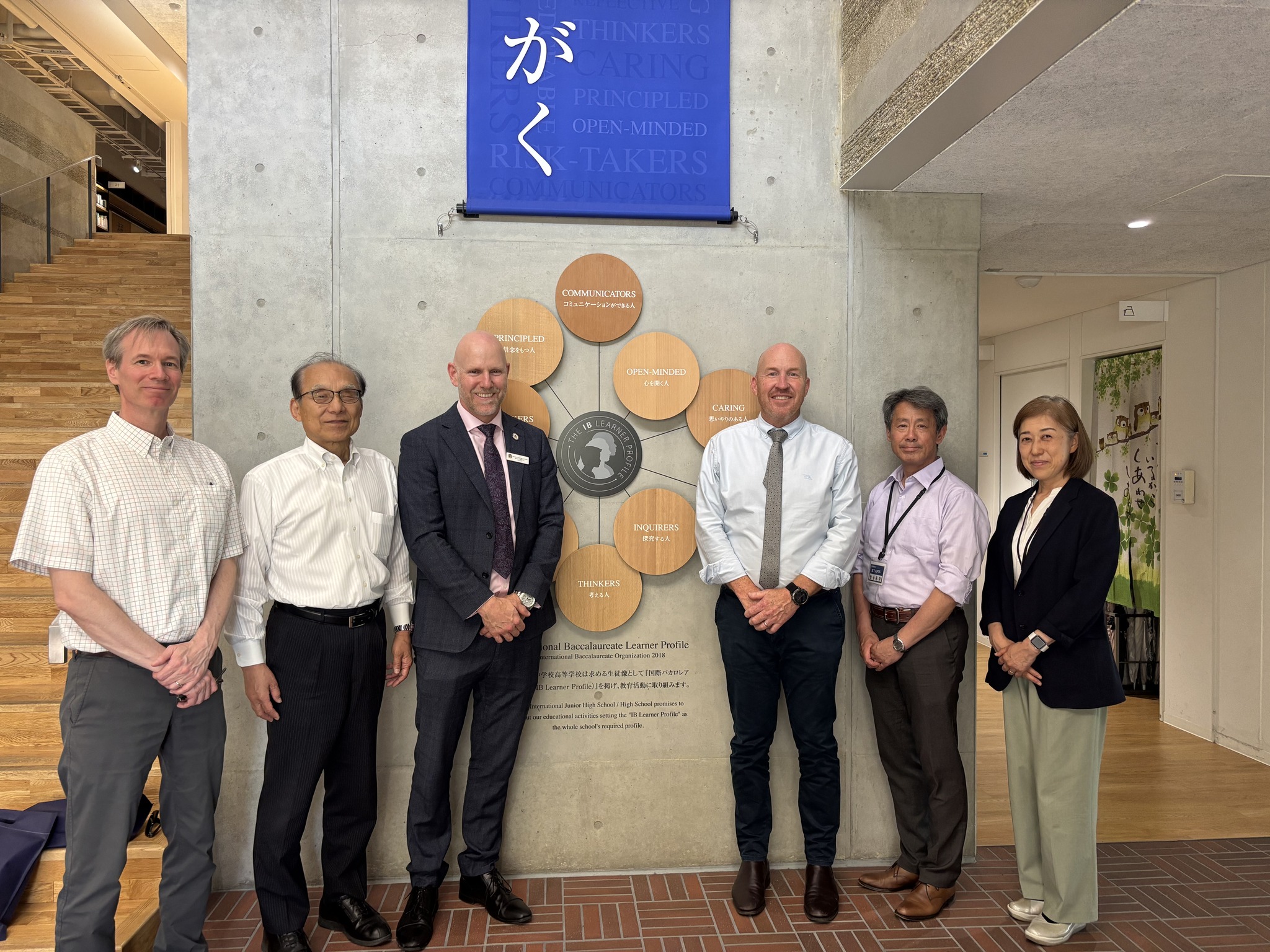
Visiting Osaka International High School, Japan
Strong global partnerships continue to be a defining strength of Scotch Oakburn College, enriching learning, broadening perspectives and strengthening our sense of connection to the world.
Our active participation in the Round Square network remains central to this work. Through student and staff attendance at international conferences, involvement in mini-clusters and engagement in student exchanges, we provide authentic opportunities for our young people to experience different cultures, challenge their thinking and grow as globally minded citizens. Importantly, this work is also evident closer to home, where students engage in local initiatives focused on awareness raising and service, closely aligned with the Round Square IDEALS. These experiences play a powerful role in shaping empathy, resilience and a deep appreciation of diversity.
Our commitment is further reflected in the range of cultural and service tours we offer. In 2026, students will travel to Singapore and China for rich cultural immersion experiences, while our South Africa tour will focus on meaningful, service-based engagement. These opportunities allow students to develop a deeper understanding of the world and the impact they can have beyond their immediate environment.
Recently, we were privileged to host students and staff from Beijing Jingshan School. This visit provided a rich immersion experience for our guests, who expressed deep gratitude for the opportunity, a sentiment we equally share. Our partnership with Jingshan continues to grow in both strength and significance.
At the same time, our presence in Japan and South Korea over the past week has focused on strengthening relationships with sister schools, agents and prospective families. This work is laying important foundations for a sustainable, long-term exchange program across both our Day and Boarding School.
Together, these partnerships reflect our commitment to preparing students for a world that is deeply interconnected.
Ross Patterson
Principal
DEDICATED SERVICE TO THE COLLEGE BOARD

At the recent Annual General Meeting, we acknowledged an important moment in the life of our College, with Mr David Finnigan stepping away from his role as Chairperson and Board Director following 13 years of dedicated service to the College Board and its sub-committees, including the past four years as Chairperson.
David has given countless hours of his time to the College, consistently demonstrating a deep commitment to its ongoing success and sustainability. His contribution has been both significant and enduring, assisting the College to navigate a number of important and often complex moments as a Board Director, including the development and implementation of SOC2035, the challenges presented by the COVID-19 pandemic and the careful stewardship of the College through its fee restructure in 2019.
As Chairperson, David has provided steady, thoughtful leadership across a period of considerable growth and change. In particular, he has overseen the development of the Lachie Wright Centre, a transformative addition to our Elphin Campus that will benefit generations of students. He has also championed and strengthened the College’s commitment to a truly holistic education, ensuring that academic, co-curricular and wellbeing priorities remain deeply interconnected in our approach. Importantly, David has guided the Board and College through a period of financial and operational complexities with care, diligence and foresight, positioning the College with confidence for the future.
On behalf of our entire community, I extend my sincere thanks to David for his outstanding service, wisdom, and unwavering commitment to the College. We are deeply grateful for the legacy he leaves.
I am also pleased to share that the Board has appointed Ms Rebecca Cuthill as Chairperson and Mr Paul Veerhuis as Deputy Chairperson. Rebecca brings considerable governance experience, a strong understanding of the College, and a deep commitment to our strategic direction and community. Paul likewise offers thoughtful leadership and valuable perspective in his role as Deputy Chairperson, together with an active contribution to the work of the Finance Committee.
We are fortunate to have such capable leaders stepping into these roles, and I am confident that, together with the Board, they will continue to guide Scotch Oakburn College with clarity, purpose and care.
Please join me in thanking David for his exceptional contribution, and in warmly welcoming Rebecca and Paul to their new leadership roles.
Ross Patterson
Principal
LEADING THE WAY
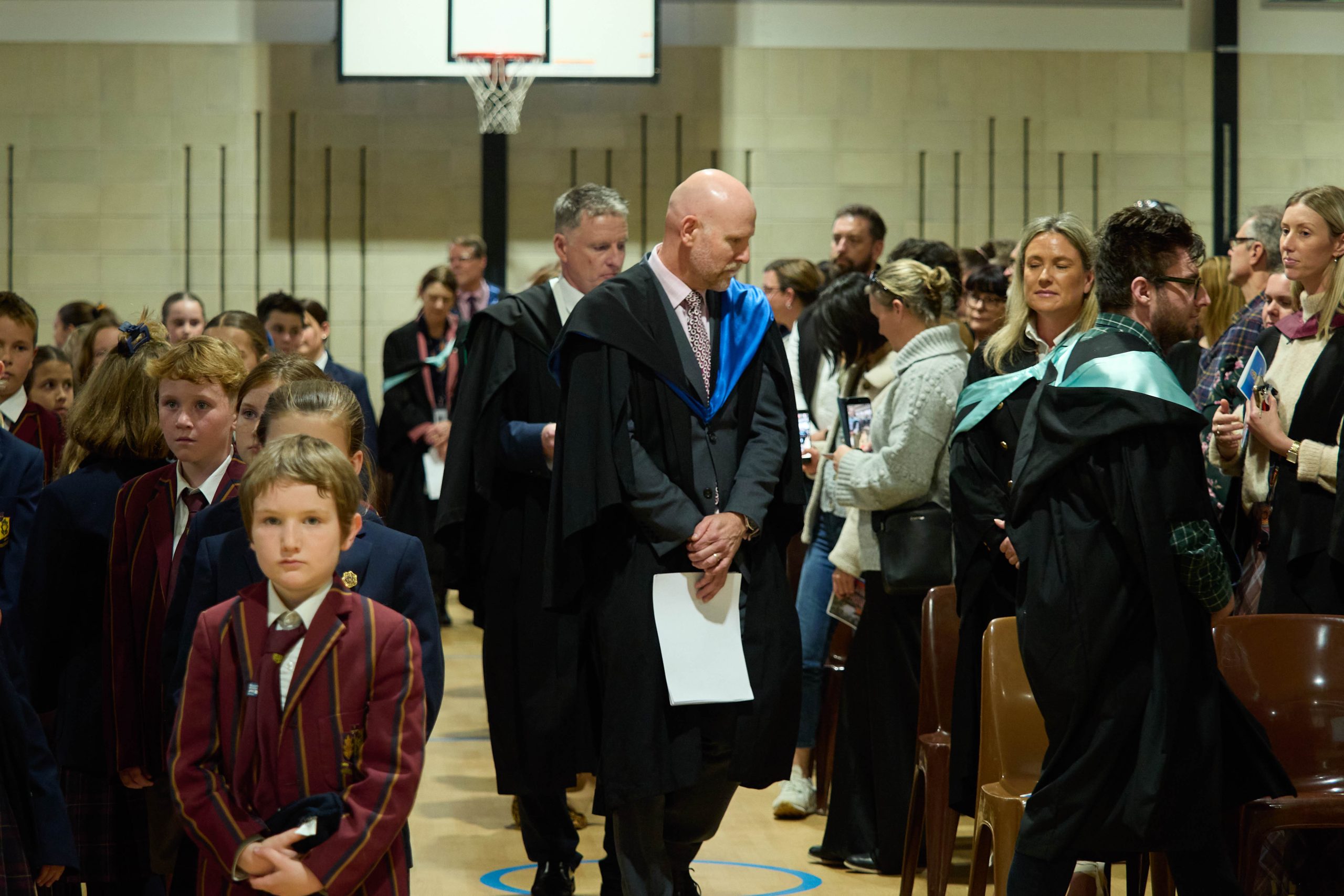
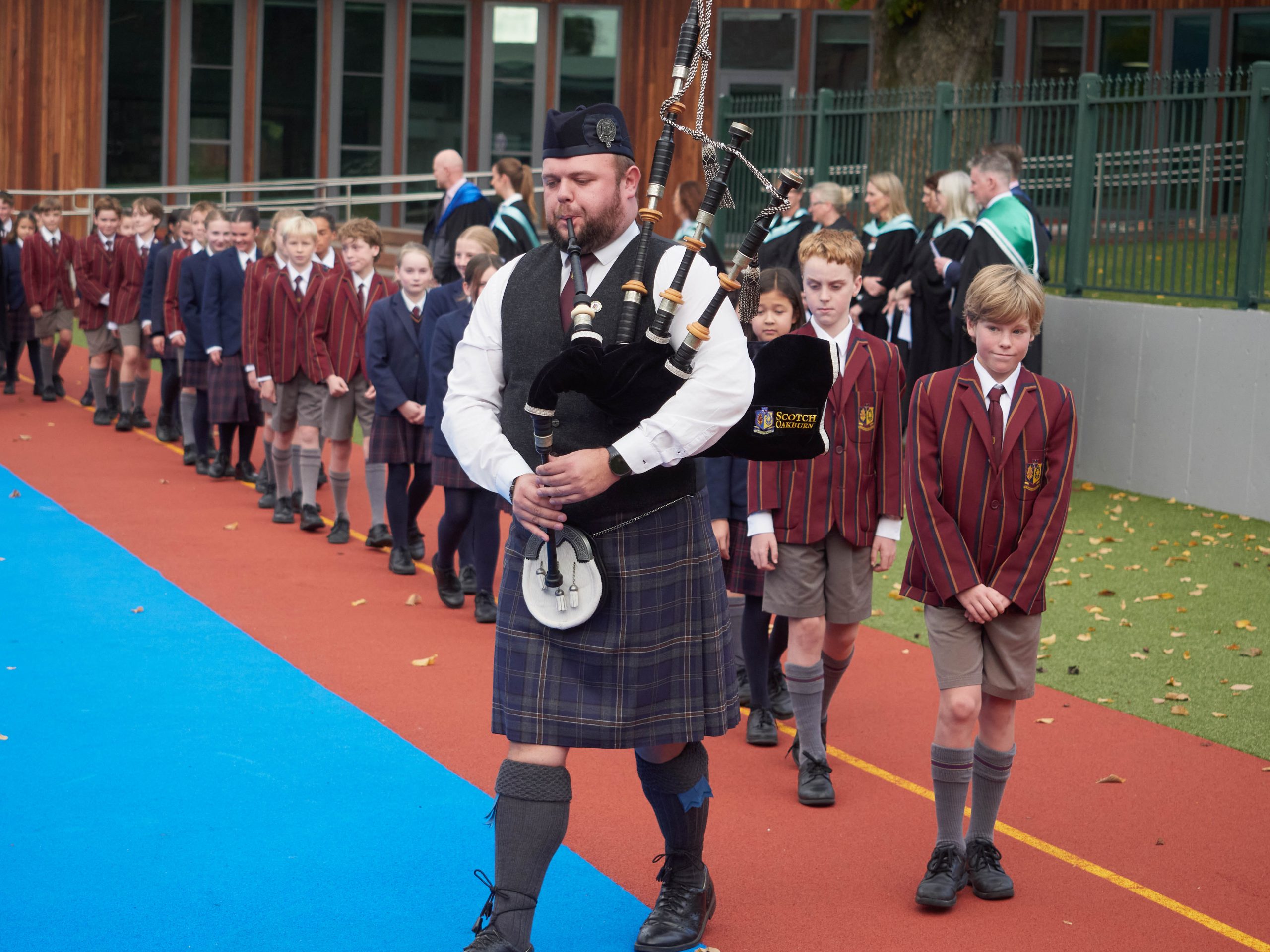
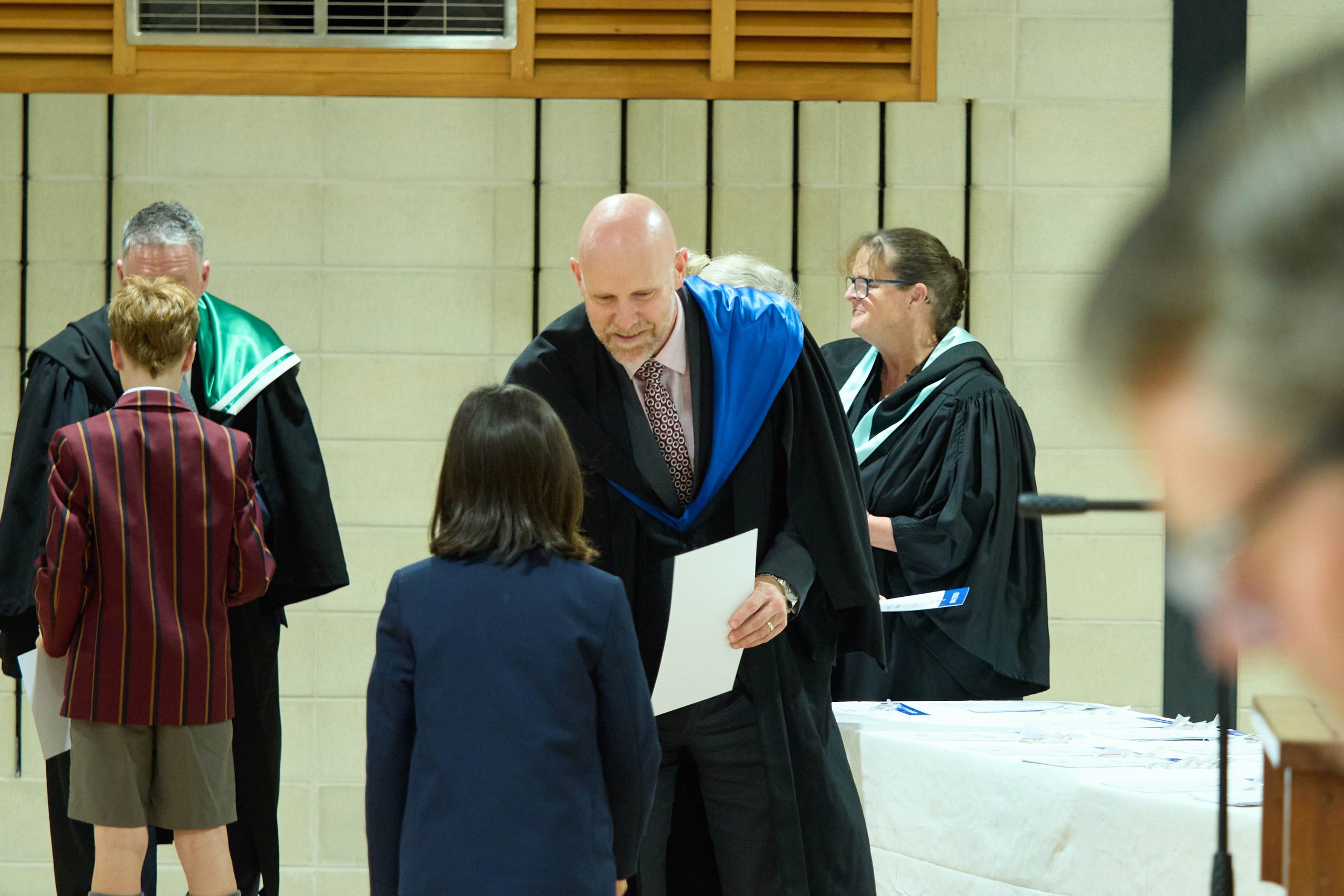
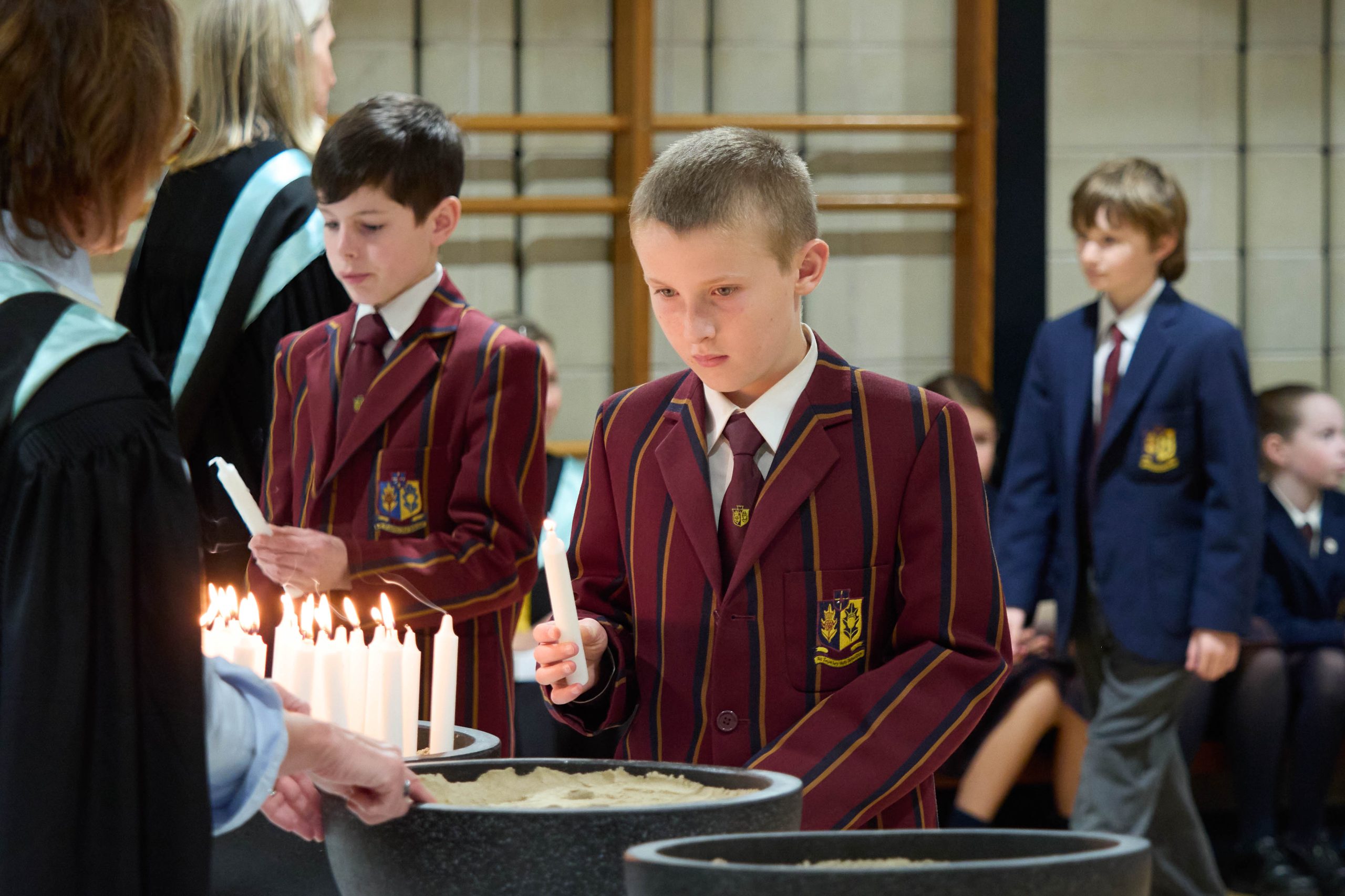
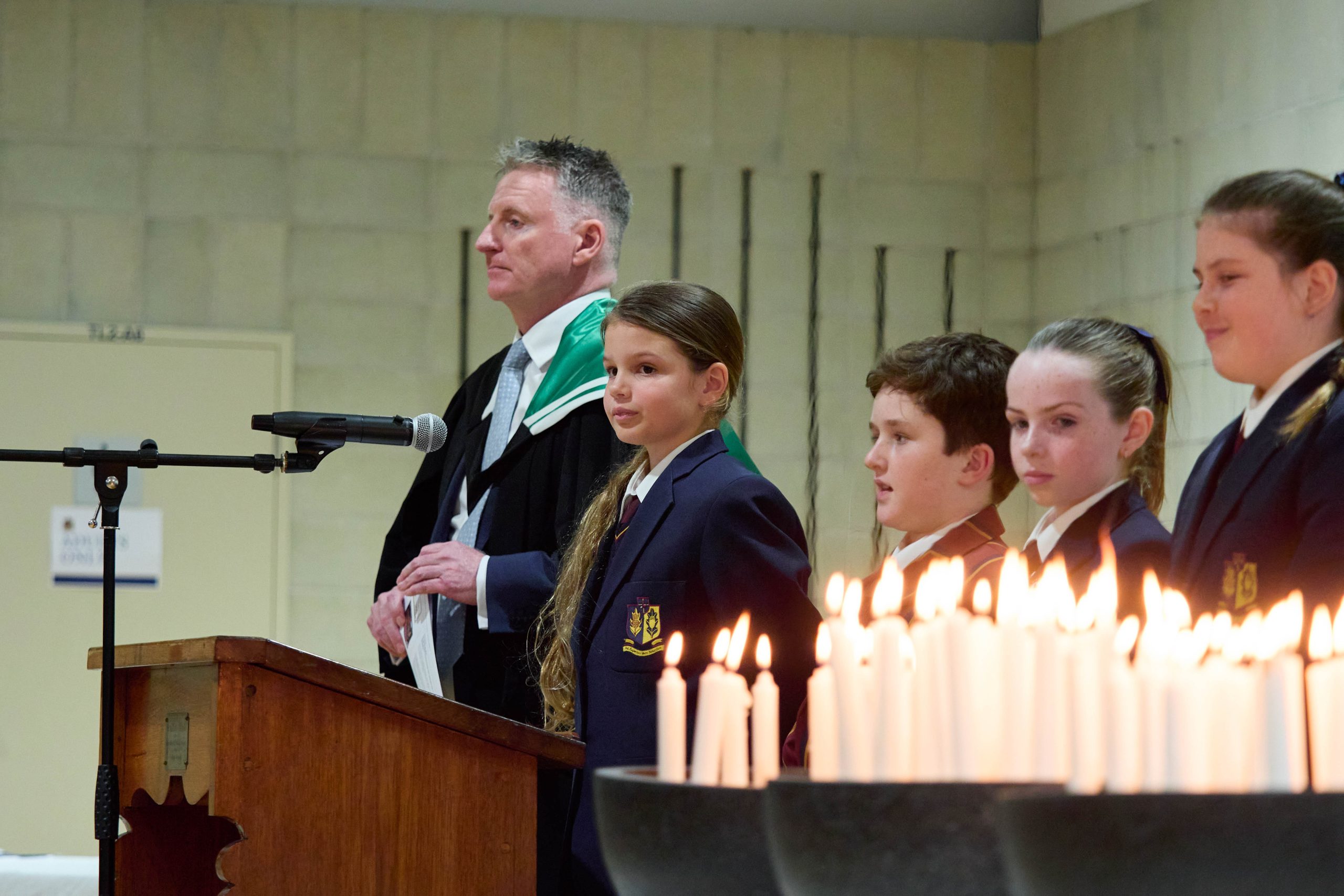
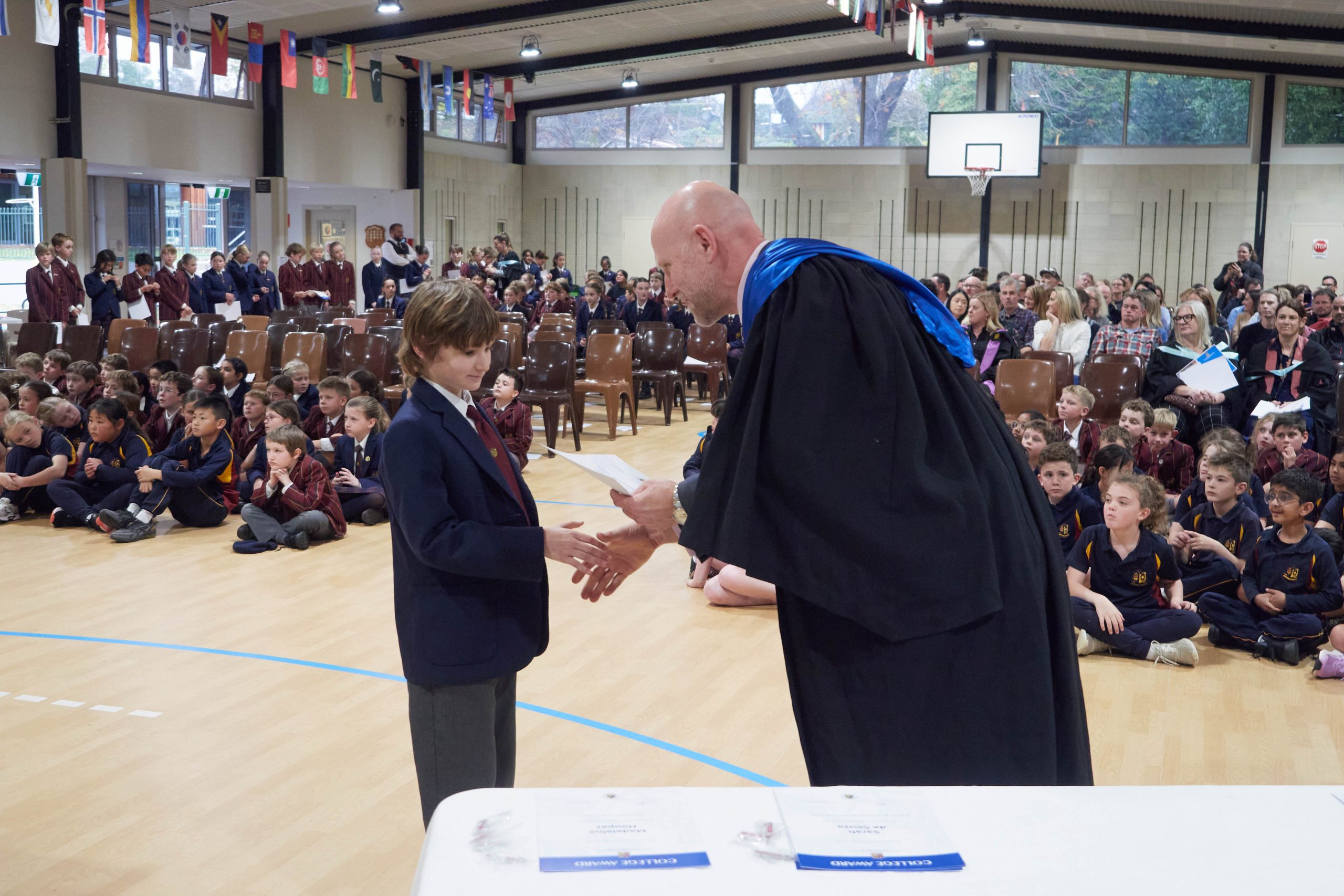
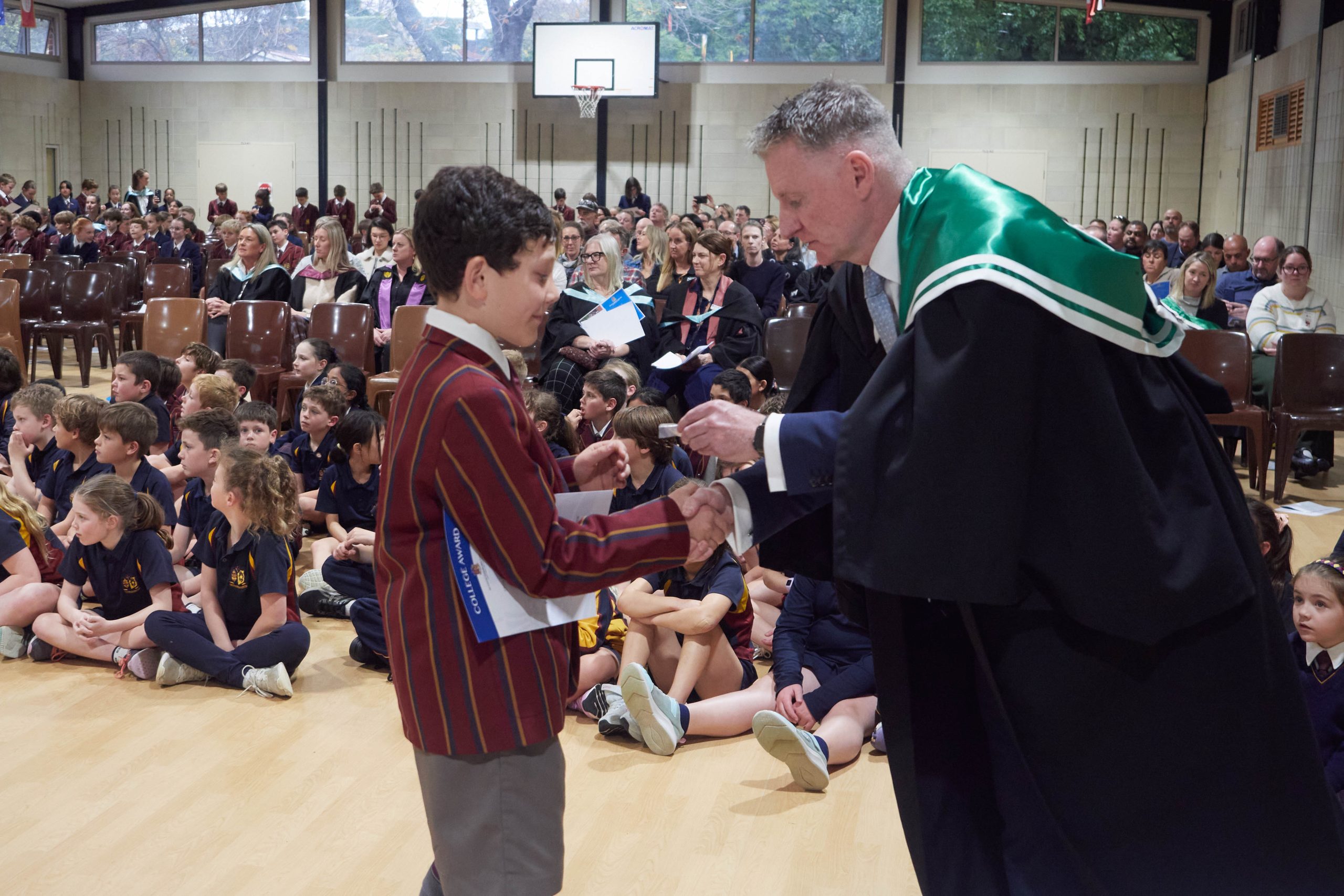
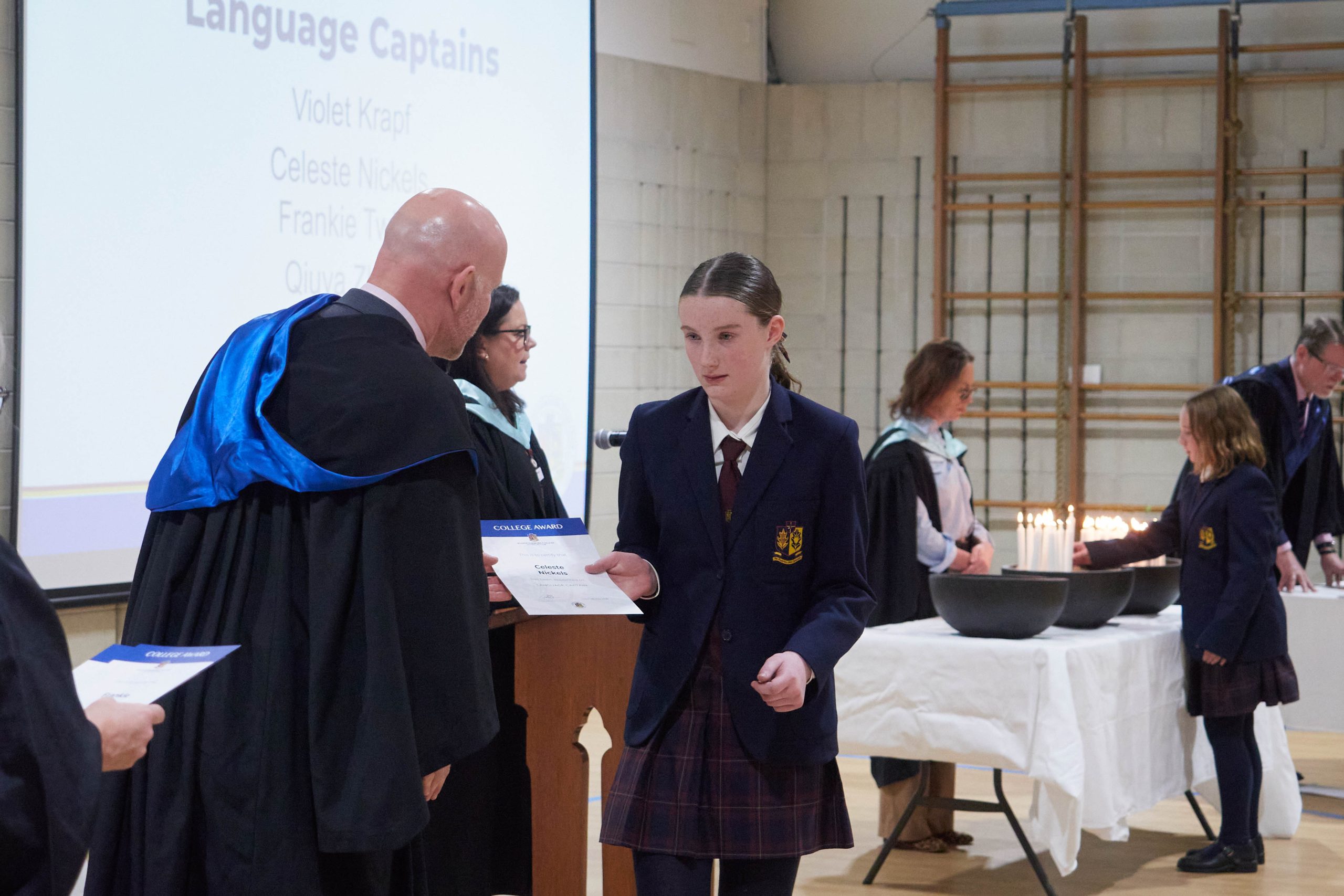
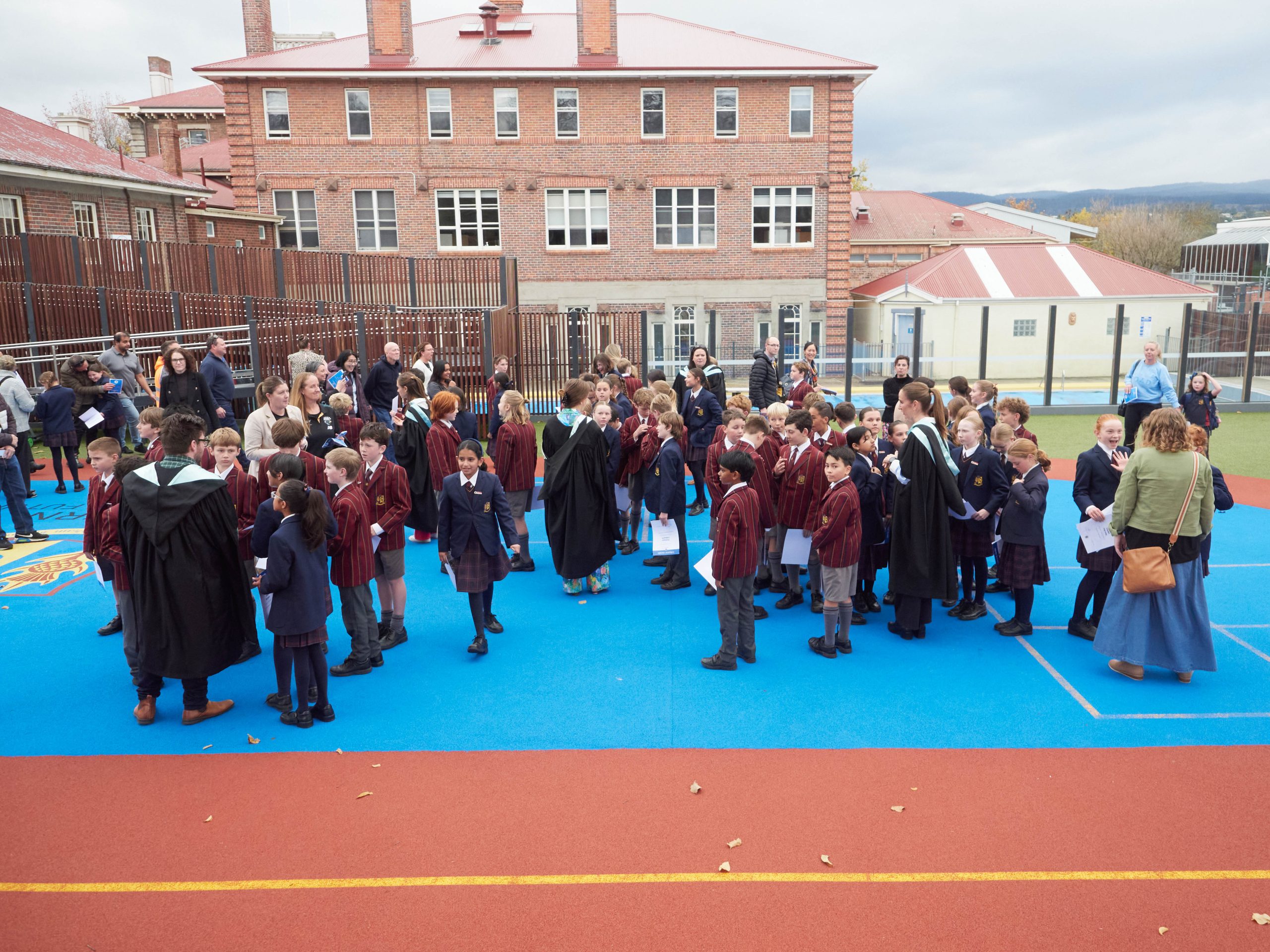
Our Year 5 Leadership Induction was a special and significant occasion for our Elphin community, where we formally acknowledged and celebrated the leadership journey of our Year 5 students.
Our Year 5 students have already begun their leadership roles in positive and visible ways through their presence at Together@Elphin, their involvement in lunchtime clubs, and their contributions to Elphin Campus events. This ceremony provided a formal opportunity to recognise their commitment and to mark their induction into leadership within our community.
During the ceremony, Year 5s participated in a meaningful commissioning process, including the lighting of candles as a symbol of shared leadership, service and commitment to others. There were also reflections on leadership, student voice and a blessing for the year ahead.
Thank you to all those families that were able to attend.
Peter Williams
Head of Elphin Campus
EXCHANGE TO SALEM – ORIGINAL SCHOOL OF KURT HAHN
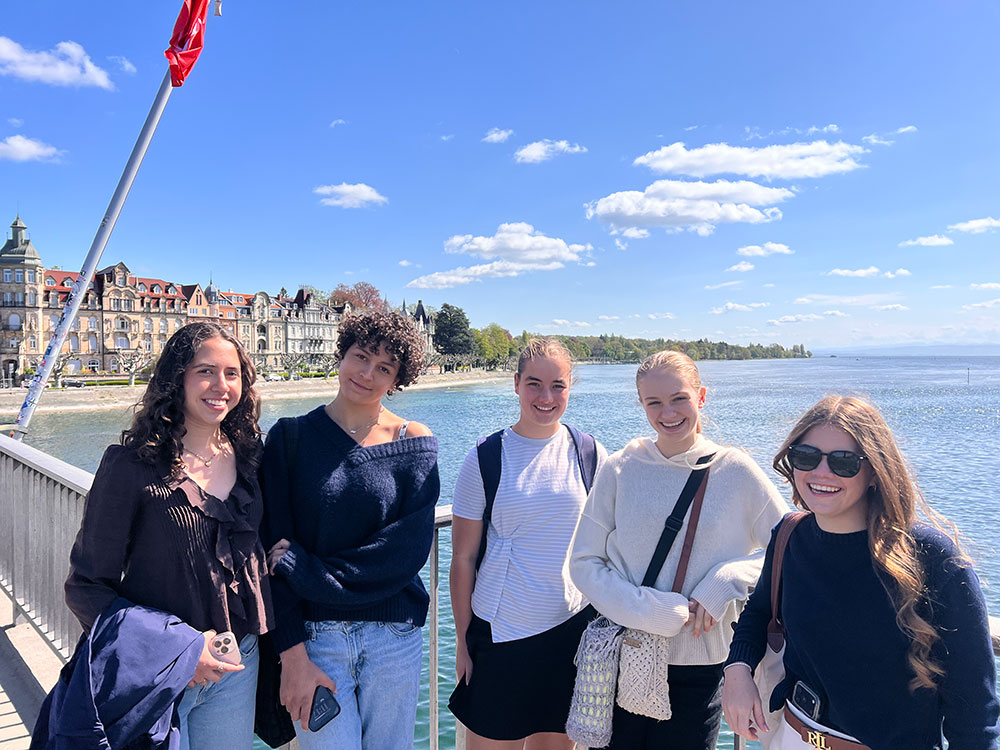
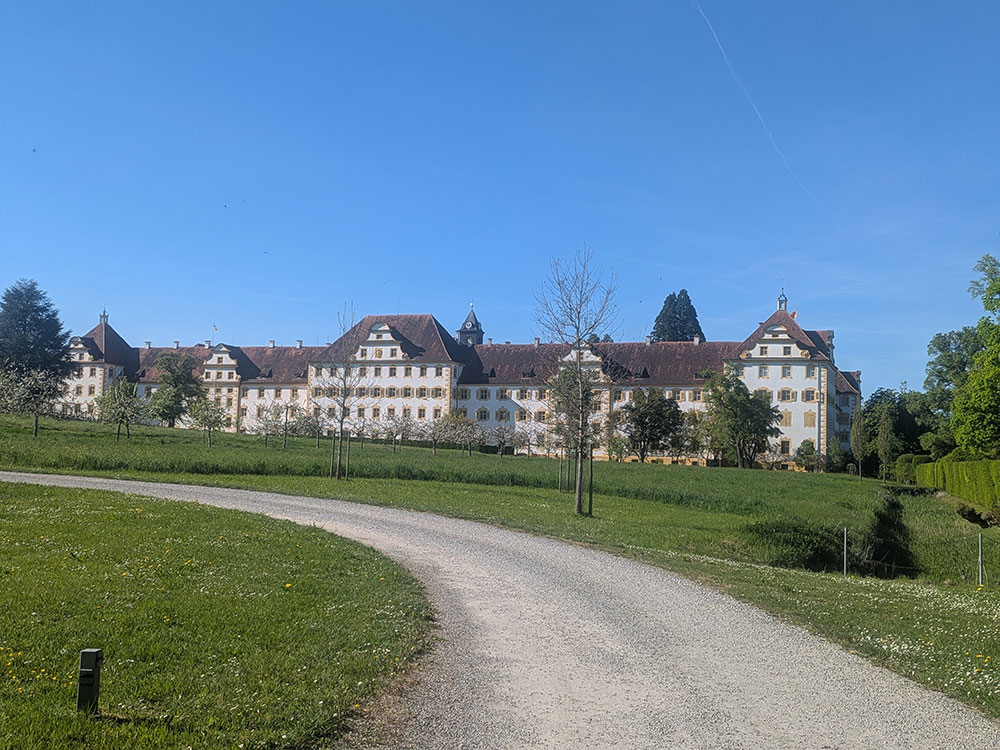
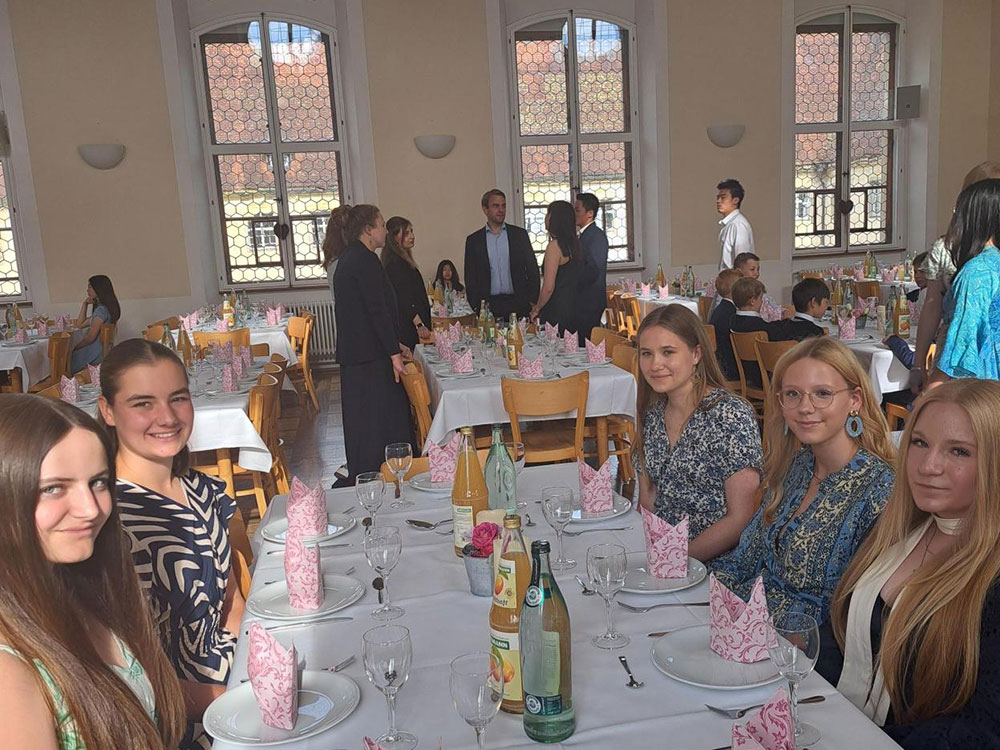
I was fortunate enough to spend April and May on Round Square exchange at Schule Schloss Salem in southern Germany. Before school began, my exchange partner, Lili Keck, and her family took me to Croatia for a week, which was an amazing way to start the experience. I stayed at Salem for the entire six-week Epoche (term) and lived in the boarding house throughout.
A typical day started at 6:30 am with the morning run, followed by breakfast at 7:45 and Ansagen (announcements). Classes were an hour and a half long, with the first beginning at 8:00 am. Every day there was the option of a second breakfast from 9:30–9:50. Lunch, which was compulsory for everyone, ran from 1:45–2:15 and was a much bigger part of the day than I’m used to in Australia. Everyone sat with their wing — the 15–18 people you boarded with — and there was always a hot meal and dessert.
On Tuesdays, Thursdays, and Fridays I had afternoon classes from 2:30–4pm. Mondays included Sani-Dienst (first aid service) and hockey, while Wednesdays were painting and hockey, all running between 4:00 and 9:00 pm. From 3:30–4:30 each day there was Vesper, an afternoon tea of cakes and hot drinks in the Torkel, while all other meals were in the Speisesaal (dining hall). Monday to Friday also included Arbeitsstunde (study hour) from 5:30–6:30 pm. We even had school on Saturdays, although only for the first two blocks, finishing at 11:30 am. Sundays included brunch, which everyone agreed was the best meal of the week.
Life at Salem was very different from life in Tasmania. The earlier mornings and later nights took some adjustment, but I loved the strong sense of community that came from almost everyone boarding. Because everyone knew each other well, there were very close friendships across the school. I also enjoyed the independence that came with school finishing at different times each day and the freedom once classes were over. It was common to walk into the nearby village of Salem to visit the shops or the Schlossee (lake). The only expectation was that you returned for Arbeitsstunde and Flügelzeit (wing time).
One challenge of boarding was that there could be a lot of unstructured free time, although I usually filled it by talking with friends or going for a run. During my final weekend, the whole school stayed on campus for the Salem Weekend. This Epoche’s event was a 24-hour run, where three wings were always running or walking around the athletics track. I completed four shifts across the day and night.
If I could combine the best parts of Salem and Scotch Oakburn College, I would definitely include the wide range of services offered at Salem, such as Sani-Dienst (Red Cross), Feuerwehr (fire service), and Social Dienst (social services). I also liked the flexible timetable and the relaxed uniform, where students only had to wear the school polo shirt with blue or beige pants and any shoes they wanted. At the same time, I would keep the sports carnivals and wider variety of sports offered at Scotch Oakburn, as Salem had fewer sporting opportunities and events. I would also keep our electives, because Salem does not offer them and I think they add a lot of variety and enjoyment to the school day.
Salem itself, set in a castle, was an incredible place to live and learn. There were also many leadership opportunities across all year levels, including wing helpers, class speakers, school speakers (similar to school captains), and the Essaal Mannschaft, the students responsible for announcements and helping run the dining hall.
I truly loved my time at Salem and made lifelong friends from all over the world. My favourite part was probably the boarding lifestyle because of the strong sense of community, friendships, laughter, and freedom. I know I will always look back on my exchange positively, and I am extremely grateful to everyone involved in organising it.
Annabel Crisp
Year 10 Student
BETWEEN TWO WORLDS

As part of a Round Square exchange, I spent two months at St Stithians College in Johannesburg. The experience gave me the rare opportunity to compare life in South Africa with my home in Tasmania, two places that are vastly different in geography, culture, and pace, yet both have shaped my perspective in meaningful ways.
Tasmania feels calm, grounded, and closely connected to nature. Life moves at a slower pace, with fresh air, open spaces, and the ocean never far away. There’s a strong sense of community and familiarity, and daily life feels balanced, whether it’s walking along the beach, kicking the footy with mates, or simply enjoying the quiet.
Johannesburg, by contrast, is full of energy. The city is fast-paced, diverse, and constantly changing. The mix of cultures, languages, and experiences creates an exciting environment where no two days feel the same. Living there encouraged independence, adaptability, and confidence. It pushed me out of my comfort zone and taught me to embrace new experiences.
One of the biggest differences I noticed was the pace of life, especially at school and in sport. Tasmania feels predictable and relaxed, while Johannesburg was intense and energising. Neither is better than the other, they simply offer different strengths. Tasmania provides space to slow down and appreciate the small things, while Johannesburg inspires growth, resilience, and openness to change.
The environments themselves also reflect this contrast. Tasmania’s natural beauty is unmatched, with clean air and easy access to nature wherever you are. Johannesburg’s richness comes from its people, culture, and vibrant social life. Experiencing both has shown me the value of balance: combining peace and adventure, stability and challenge.
If I could design my ideal life, it would bring together the best of both worlds, the natural beauty and close community of Tasmania alongside the diversity, opportunity, and energy of Johannesburg. This exchange showed me that you don’t have to choose one world over the other. Instead, you can carry the best parts of each with you, and allow them to shape the person you become.
Harry Procter
Year 10 Student
SO YOUR YEAR 12 STUDENT HASN’T DECIDED WHAT’S NEXT

As our Year 12 students head towards the end of their TCE journey, the question of “what next?” can loom large for many. Below is an extract and link to an article that mirrors many of the questions and conversations our Year 12s are having when they visit the Futures Centre, and is a useful guide for parents/carers having similar conversations at home.
It also serves as a timely reminder that students are able to visit us in the Futures Centre any time to ask questions and get help with planning
Teresa Darcy
Careers Advisor
So your Year 12 student hasn’t decided what’s next. Here’s what to say – and what not to – about career planning
Authors: Brendon Hyndman, Associate Professor of Education, Charles Sturt University and Vaughan Cruickshank, Senior Lecturer in Health and Physical Education, University of Tasmania
For Year 12 students, final exams are getting closer and applications for university and other courses are opening. So naturally, conversations at home and with wider family and friends are turning to what’s going to happen next year. Some young people will not have an answer yet when asked, “what are you doing next year?” This can really worry parents. But not having a fully formed plan in Year 12 is not a failure. For many young people, it is a normal part of moving from school into the next stage of life.
What can parents and other family members say to help – and not further increase stress on – young people at this time? What’s helpful right now?
Rather than focusing on why they have not decided yet, families can talk about what information would make the decision feel less overwhelming. So, avoid asking what a young person “wants to be” and instead ask what subjects, tasks, people or places seem to bring out their best. What do they think they are good at? What do they enjoy doing? What makes them happy?
Research shows, when parents focus on skills, strengths and interests, as opposed to specific careers, this can reduce a child’s anxiety about making future plans.
ROSTRUM VOICE OF YOUTH
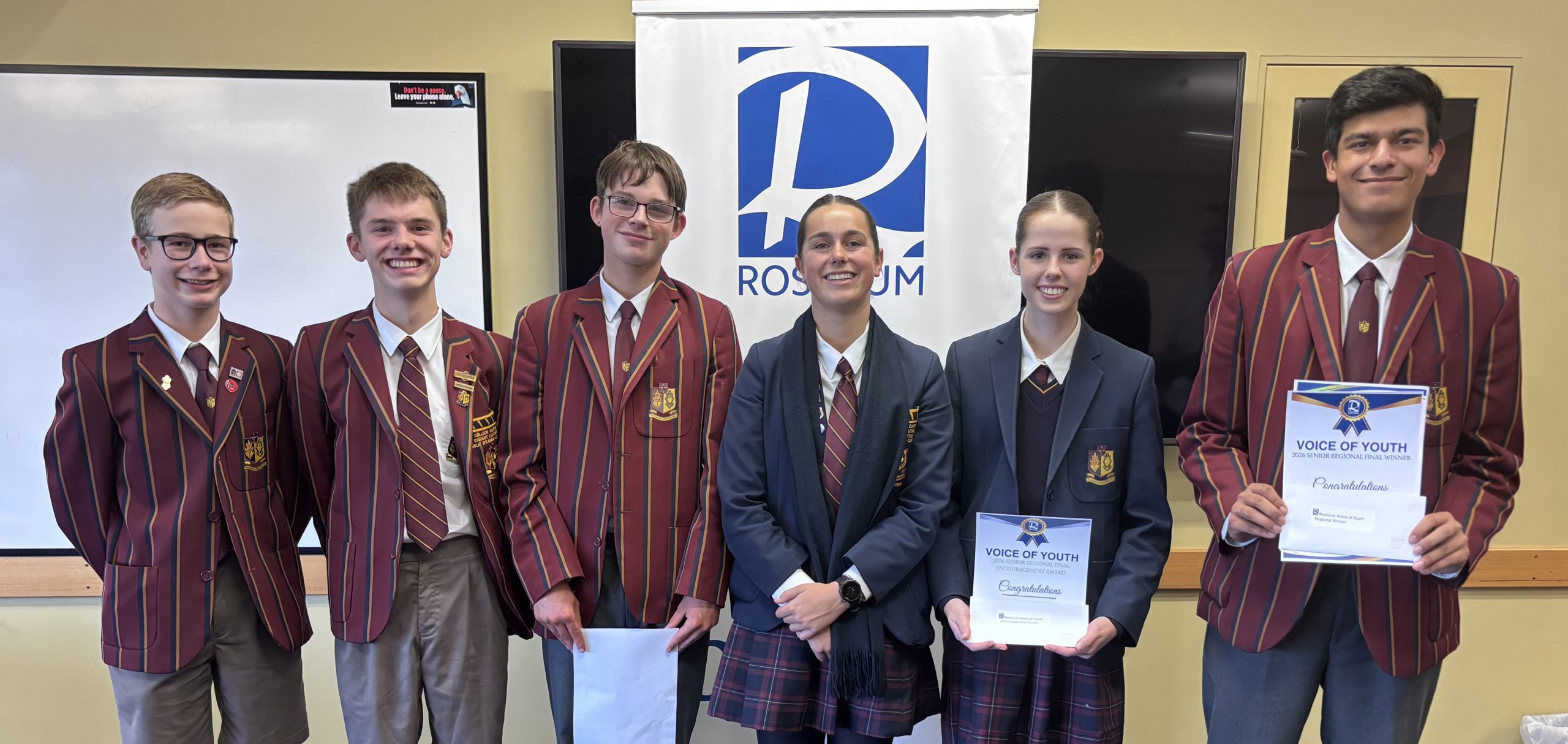
What a team! Audience members were blown away by our confident and courageous public speaking students on Saturday 16 May at the Rostrum Voice of Youth competition.
With six students competing in the Senior Division and four in the Junior Division, we swept the pool with winners in each category:
Senior:
Shiv Kataria (Year 10) – joint winner (with Samantha Amos, Launceston College)
Delilah Barrett (Year 11) – Encouragement Award
Junior:
Max Wilson (Year 9) – Group 1 winner
Peggy Handbury (Year 9) – Group 2 winner
Enormous congratulations to our Captains of Public Speaking, Meg Kilby and Calan Young, who led the charge and continue to inspire us with their dedication and leadership.
All ten students confidently delivered speeches on a wide range of engaging topics, enriched with personal stories, world knowledge, and thoughtful opinions. In the words of Peggy Handbury, “It’s not about winning, but about gaining the skills to use our voices for positive change.”
Many thanks to Rostrum, who have supported our school for many years and long recognised that effective communication is an essential skill for young people. They will be hosting the State Final here at Scotch Oakburn College on Saturday 20 June, and we are already confident that Shiv, Peggy, and Grayson will be outstanding ambassadors for our school.
Katie Lester and Aditi Kataria
People-in-Charge of Public Speaking
RESPECTFUL CONVERSATIONS

At Scotch Oakburn College, our values guide the way we learn, work and connect with one another every day. One of the most important of these is Respect – treating others as we would like to be treated and recognising the value in every person in our community.
A big part of bringing this value to life is how we communicate with each other. Whether it’s a quick conversation, an email, a meeting, or an online exchange, the way we communicate shapes the tone of our community.
It’s something we all share
Respectful communication isn’t just for one group, it sits across all relationships at the College:
- between students
- between staff and students
- between staff and parents
- and between parents themselves
When we get this right, it builds trust, strengthens relationships, and helps create a genuine sense of belonging. And we know that when people feel safe and respected, they are far more likely to engage, learn, and thrive.
Everyone has the right to feel respected
As members of the Scotch Oakburn community, we all have the right to:
- feel safe and supported
- be treated with respect, courtesy and dignity
- be listened to and taken seriously
- be treated fairly
These are fundamental to a positive school environment and are reflected in the College’s expectations and policies. College policies | Scotch Oakburn College Launceston Tasmania
And we all have a role to play
Alongside these rights comes a shared responsibility. This means:
- communicating calmly and respectfully, even when things are challenging
- being open to different perspectives
- choosing constructive, solution-focused conversations
- modelling the behaviours we want to see in our young people
Importantly, respectful communication doesn’t mean avoiding difficult conversations, it means approaching them in the right way, with care and professionalism.
Supported by our policies and practices
The College has clear policies that outline expectations for behaviour and communication, and these are available to all members of our community. They exist to support a safe, respectful and inclusive environment for everyone.
We also place strong emphasis on restorative practices, which focus on listening, understanding impact, and repairing relationships when things go wrong. This approach helps us move forward positively and continue to strengthen our community.
Bringing it to life each day
Ultimately, respectful communication is about the small, everyday moments, how we speak, how we listen, and how we respond to one another.
By keeping respect at the centre of our interactions, we create a community where people feel valued and connected, and where both wellbeing and learning can truly flourish.
Kylie Wolstencroft
Director of Wellbeing – Penquite
A LIFE CHANGING EXPERIENCE IN CAPE TOWN
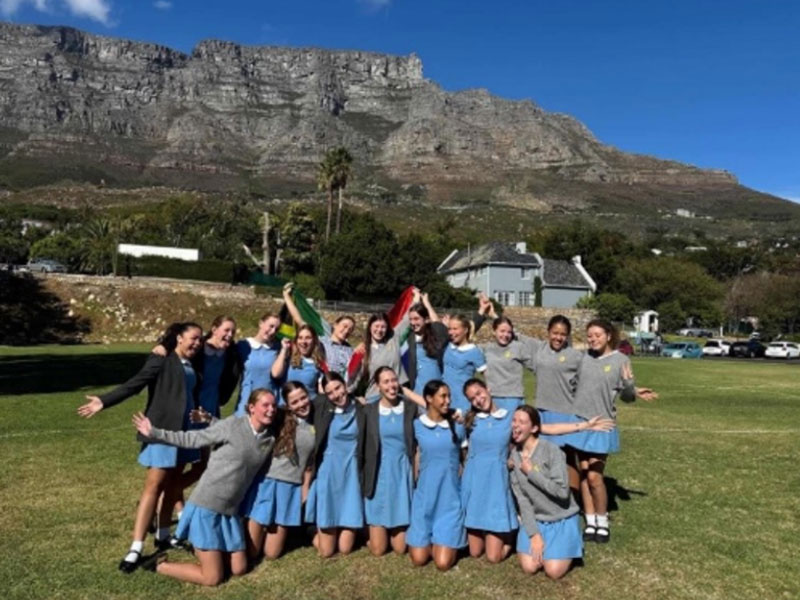
I have had the incredible opportunity to embark on a two-month exchange to Cape Town, South Africa. I cannot express how much this rare experience opened my eyes to the world while teaching me many crucial lifelong lessons along the way. At first, it was strange learning and living in a completely foreign country on the other side of the world, constantly being exposed to new people, foods, cultures, languages, and a completely different way of life with a new family. Now that I am home and back to my normal Australian life, I did not realise how much I was going to miss South Africa. If I could bring some of my favourite South African cultures and traditions back with me, I absolutely would.
One of the main things I admired was the South African spirit, particularly surrounding sport, whether school-based or nationwide. During my exchange, I was fortunate enough to attend a South African rugby match with cheerleaders, fireworks, organised chants, and even choreographed dances performed by the team, which became one of the highlights of my trip. I found that South Africans had a very spontaneous way of living, which made it the perfect place for an exchange because I was able to see and experience something new every single day. Whether it was going to school and then hiking up a mountain afterwards, being a last-minute fill-in for a cyclathon, joining 5:30 a.m. sunrise surf sessions, or taking part in birthday beach yoga, I was never bored or given time to feel homesick.
At the same time, I missed Australians and our culture, and I realised it was something I was very proud of. I often wished I could have brought all my new friends home to experience it. Reflecting on Australian culture and what I could share with South Africans was actually much harder than I expected, as both places were surprisingly similar despite being worlds apart. A couple of things I would share with South Africa would be our peace of mind and relaxed atmosphere. I noticed that almost every home had fences and complex security systems installed for reassurance, not necessarily because it was unsafe, and this was one of the biggest differences I noticed, especially compared to my home on King Island. I would also introduce them to AFL, as they already enjoy sports such as rugby, touch football, and soccer, and I feel many people would enjoy playing Aussie Rules as well.
Overall, I am incredibly grateful that I took this opportunity and created the treasured lifelong memories and connections that I did. There is a clear reason why so many people say an exchange experience changes them. I would highly recommend this amazing opportunity to anyone considering it.
Leila Bell
Year 10 Student
ARTIFICIAL INTELLIGENCE GUIDELINES

Guided by our Values of Compassion, Commitment, Responsibility, Respect and Courage, Scotch Oakburn College is taking a thoughtful approach to how Artificial Intelligence (AI) can enhance learning and the way we work. It offers significant opportunities to support students and staff across educational and business areas, while also requiring a clear understanding of its strengths and limitations.
Prior to the start of the Term 1, the College partnered with AI for Education to deliver professional learning for all staff. This provided a valuable opportunity to build a shared understanding of AI literacy and to explore its impact across both teaching and business operations.
Following this work, the College has developed a comprehensive set of Generative Artificial Intelligence Guidelines. These provide a clear framework for how AI can be used responsibly across year levels and within professional practice, while explicitly supporting the development of AI literacy in students. They are designed to build the knowledge, skills and mindset students need to engage with this technology safely, ethically and effectively.
At the centre of the guidelines is a commitment to ensuring AI enhances human thinking, creativity and problem-solving, rather than replacing it. This reflects the College’s belief that technology should support, not substitute, human thinking and learning.
This is underpinned by the Safely, Ethically and Efficiently (SEE) model, which promotes safe use to protect privacy and wellbeing, ethical use grounded in integrity and respect, and effective use to enhance learning and productivity.
Artificial Intelligence is increasingly supporting teaching, learning and business operations through improved communication, differentiation and efficiency, with clear expectations around privacy, academic integrity and critical thinking. As this area continues to evolve, the College will continue to be responsive and guided by its values. The College remains focused on building AI literacy and preparing students to engage confidently, responsibly and thoughtfully in an ever-changing world.
You can view our AI Guidelines on The Dash using this link.
Brendan Vince
Head of eLearning
COLOMBIAN VISITOR
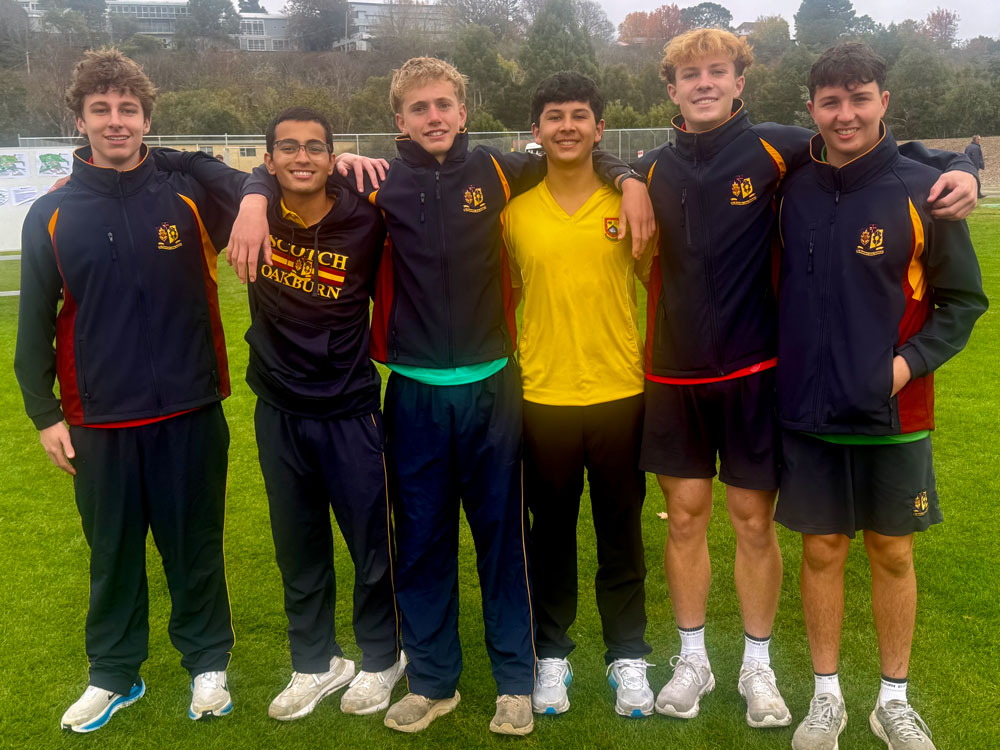
Sebastian Leal Fierro has been visiting us on a Round Square exchange for the past two months from Colegio Anglo Colombiano in Bogota, Colombia. He has been hosted by Archie Stewart and his family. Sebastian finishes his time in Tasmania this week and we thank him for representing his school and his country with such distinction.
Reflecting on his time at Scotch Oakburn and in Tasmania, Sebastian shared:
“My exchange in Tasmania has been a unique chapter, an experience of growth and independence. Living in a completely different environment, surrounded by new people, cultures and challenges, has pushed me out of my comfort zone. From adapting to a new school and, essentially, to a new life, to exploring Tasmania’s unique landscapes and places, it has been an unforgettable journey that has allowed me to immerse myself in a new way of life.
Being away from home has taught me to adapt, to appreciate different things, and to face unfamiliar experiences with confidence. Beyond the academics, it has been about creating lasting memories and learning lessons that will stay with me for the rest of my life.
Now that my trip has ended, all that remains is to remember the wonderful moments, experiences, people, and places I’ve encountered in this great country, and to be grateful for the amazing experience I had here.”
Sebastian Leal Fierro
Year 10 Exchange Student
A WINNING ARGUMENT
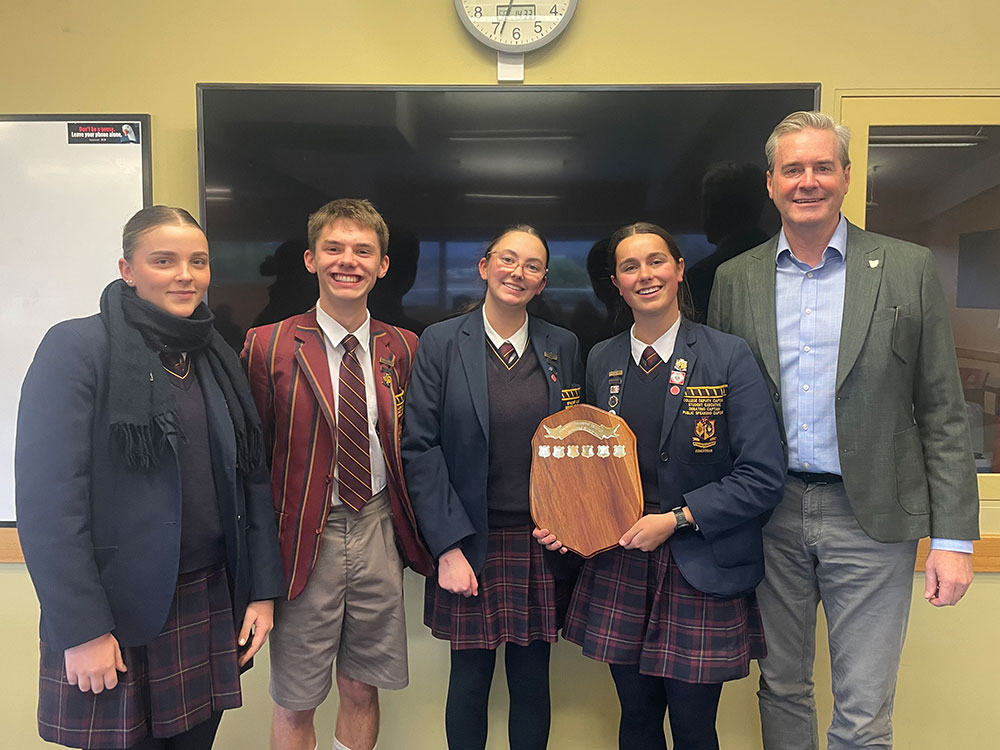
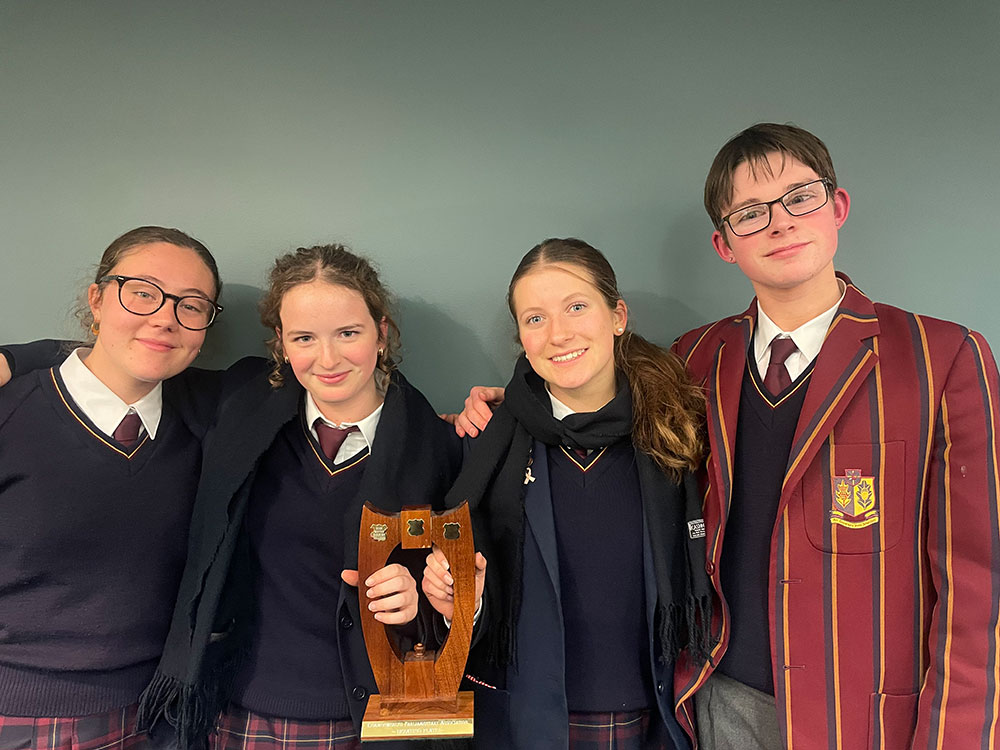
The Scotch Oakburn College Senior debating squad has capped off an excellent season with first and second positions in the 2026 senior college roster.
On Friday 22 and Saturday 23 these teams also represented the College with distinction winning the prestigious Parliamentary Shield and Parliamentary Plate competitions.
After three very competitive preliminary rounds, the Parliamentary Shield final was held in the Robert Dean Senior Student Centre. It was between Saint Brendan’s Shaw College and the Scotch Oakburn College team of Year 12 students Makaela Fulton, Meg Kilby, Georgette Wilks and Calan Young. The topic was that: Social Cohesion is more Important than Individual Rights, and we won the argument for the affirmative.
In the Parliamentary Plate competition the team of Year 11 students Elizabeth Moore, Annie Laws, Rose Talbot and Clancy Lillywhite won the deciding debate on the topic that: Today’s Politicians are nothing but Celebrities, arguing for the negative.
MHA Michael Ferguson presented the Shield and Plate to the winning teams and invited the debaters on behalf of the Speaker of the House, Jacquie Petrusma, to attend question time and tour Parliament House. All our speakers represented the College with distinction, modelling good sportsmanship, resilience and humility.
We now look forward to the hotly contested Inter-House Debating in Term 3. A sincere thank you to all speakers in the senior competition this year; we fielded four senior teams and also have five high school teams still competing in their roster.
Thank you to Ms Helen Dosser for her mentorship, expertise and passion in fostering our younger speakers and our senior debaters for their enthusiasm and support of these students, and to Mrs Carrie Dunham for her support of the senior squad this year and across Parliamentary Shield weekend.
Sharon Beattie
Person-in-Charge of Debating
TRAVELLING THROUGH TIME
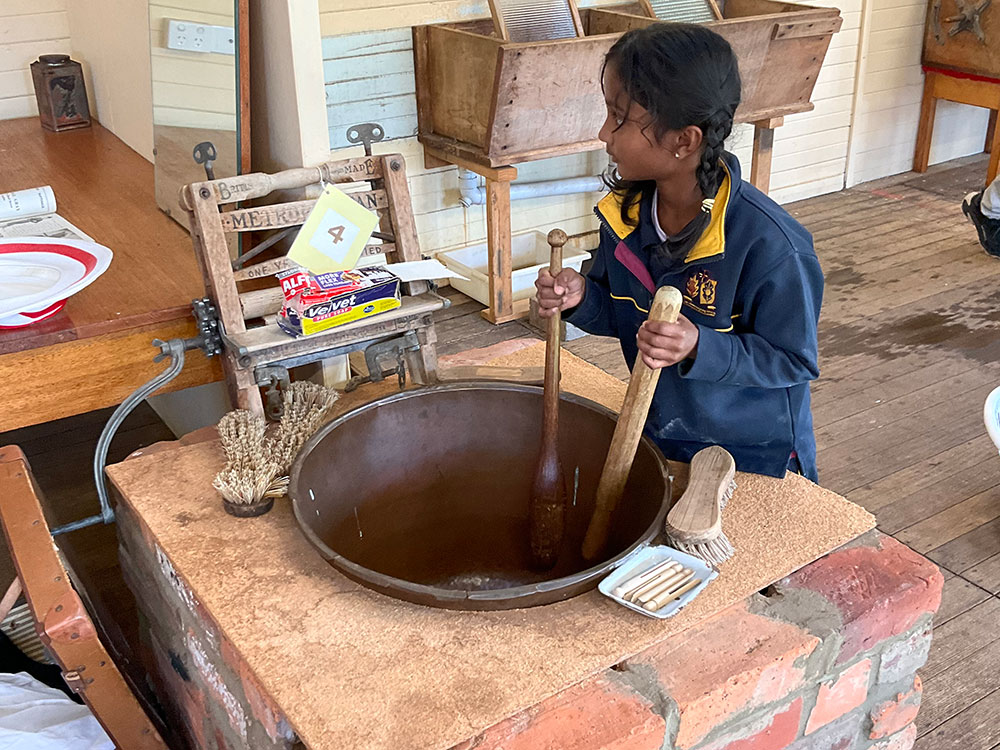
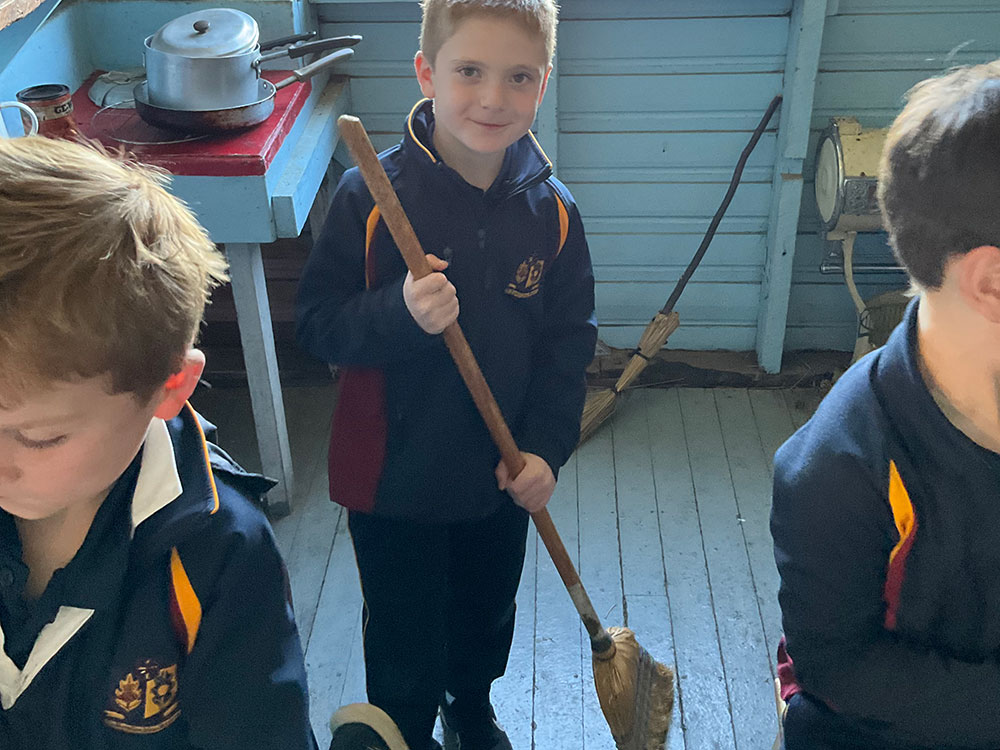
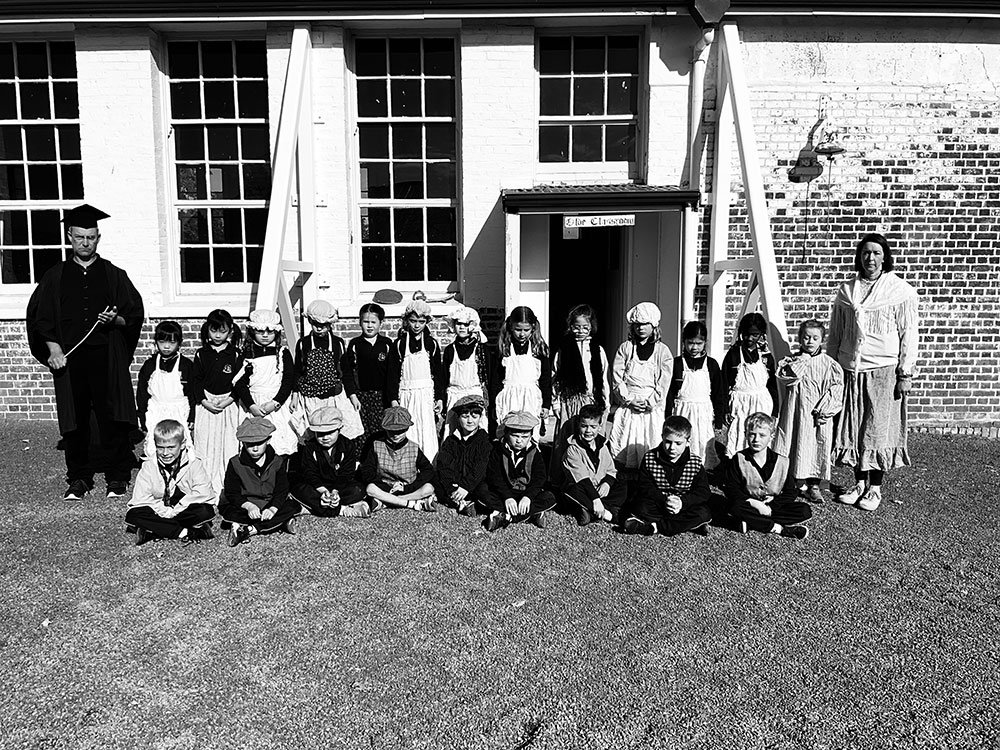
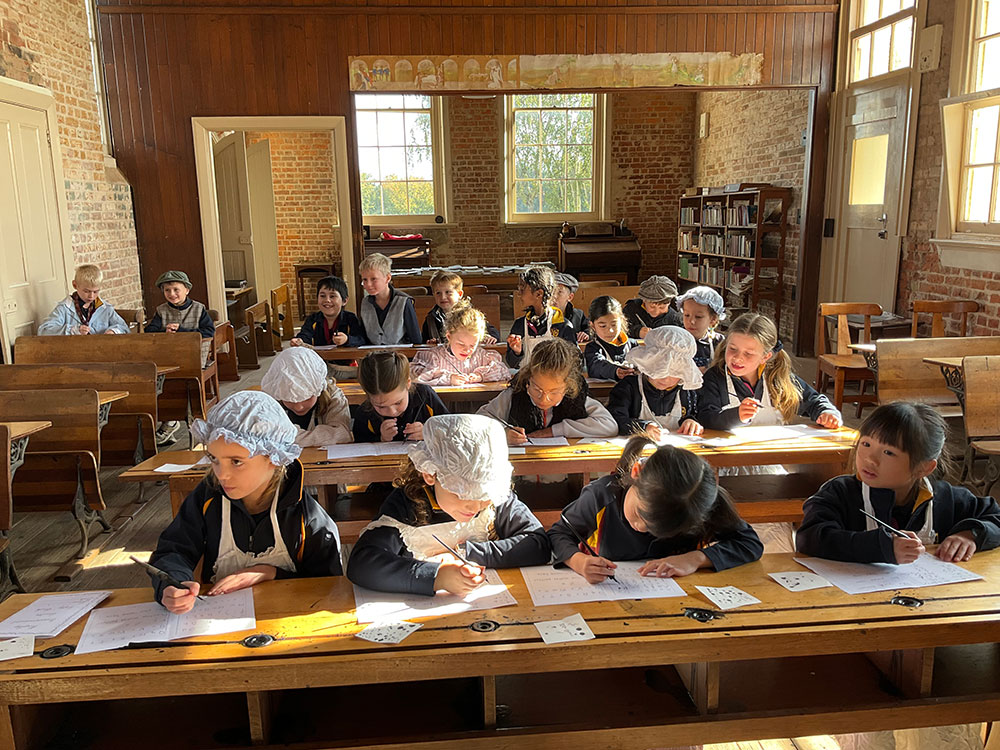
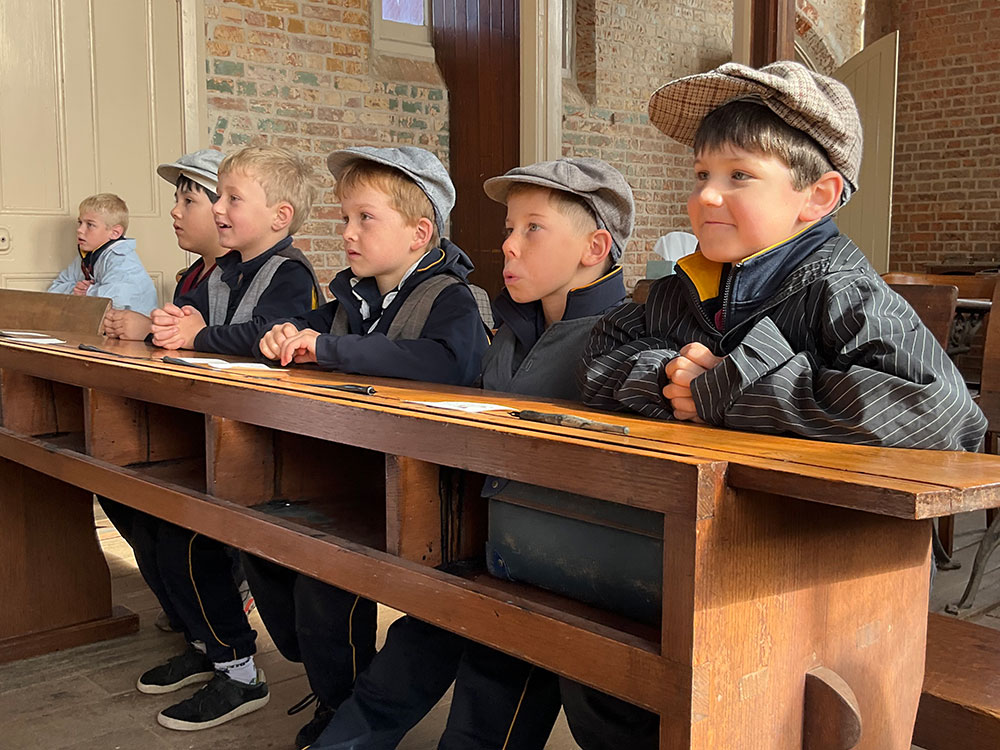
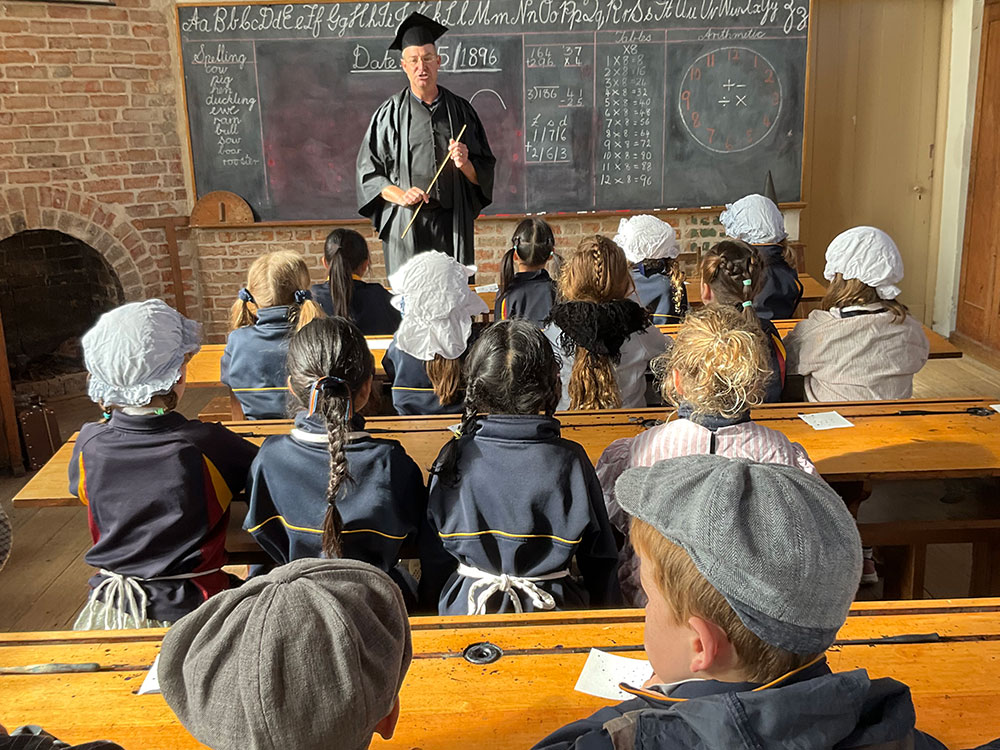
Last week Year 1 students stepped back in time as they explored what life was like in the 1800s. Students explored how life has changed over time within the home and local community, with a particular focus on schooling. They compared life in the 1800s with their own experiences today, identifying similarities and differences.
All three Year 1 classes spent the day at Hagley Farm Old School and Museum.
The day included making butter in a 100-year-old butter churn, learning how to wash clothes in a copper with dolly sticks, scrub clothes on a wash board and wring out water using a mangle.
There was also had hands-on exploration of artifacts that we no longer use in modern day life, such as record players, weigh scales and blacksmith tools.
The highlight for all was dressing up and attending school in the old, original Hagley school house with a very strict and grumpy teacher, who taught us to write with an ink pen dipped in ink. It was very hard not to make blobs on ink our work.
Most students decided they much prefer school today, where teachers are not as strict and don’t use a cane!
Nicci Dray
Teacher
KANSAI ADVENTURE
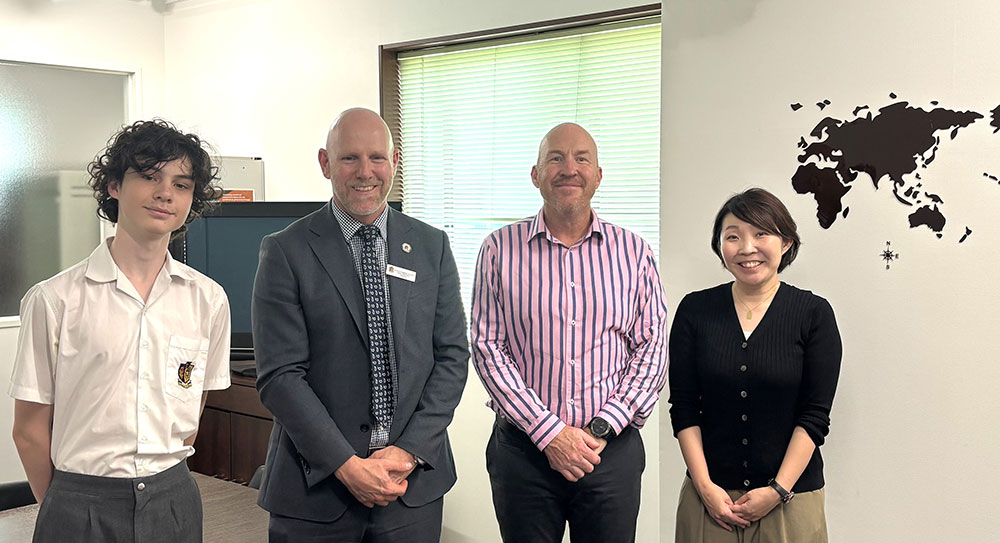
Rafe Addison Hall has arrived at Kansai International Academy in Kobe, Japan for a two month Round Square exchange. His arrival coincided with a visit to the school by our Principal, Mr Patterson, who reported that Rafe has settled quickly and is being supported by a very welcoming community. Rafe has indicated that Mr Patterson’s visit was a very welcome surprise. He has sent the following description of his first week:
“My time so far in Kobe has been wonderful, welcomed by everyone I have met. I now find that despite being deaf to some of the world around me the only things that I do hear are joy. I liken this experience to that of an infant learning to walk: no matter how many times they fall or rely on the hands of others to hold them up, they still, for the most part, keep a smile on their face and the persistence to continue within their heart. My only grievance is that time marches on and the end of this adventure will come much too fast.”
Rafe Addison Hall
Year 10 Student
CELEBRATING FRIENDSHIPS
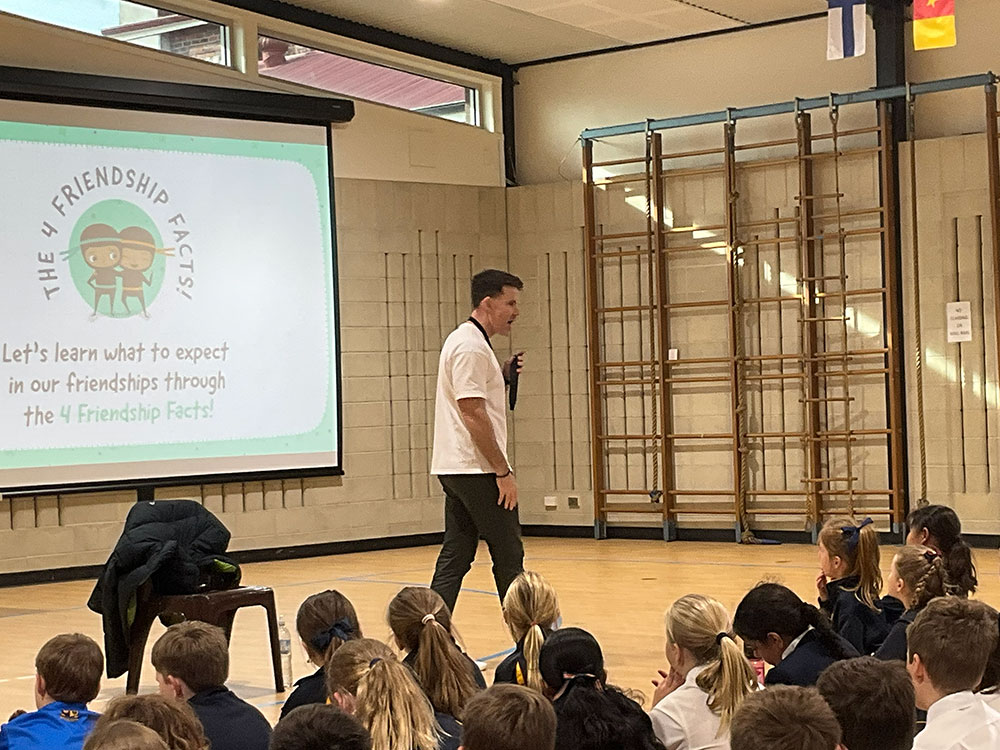
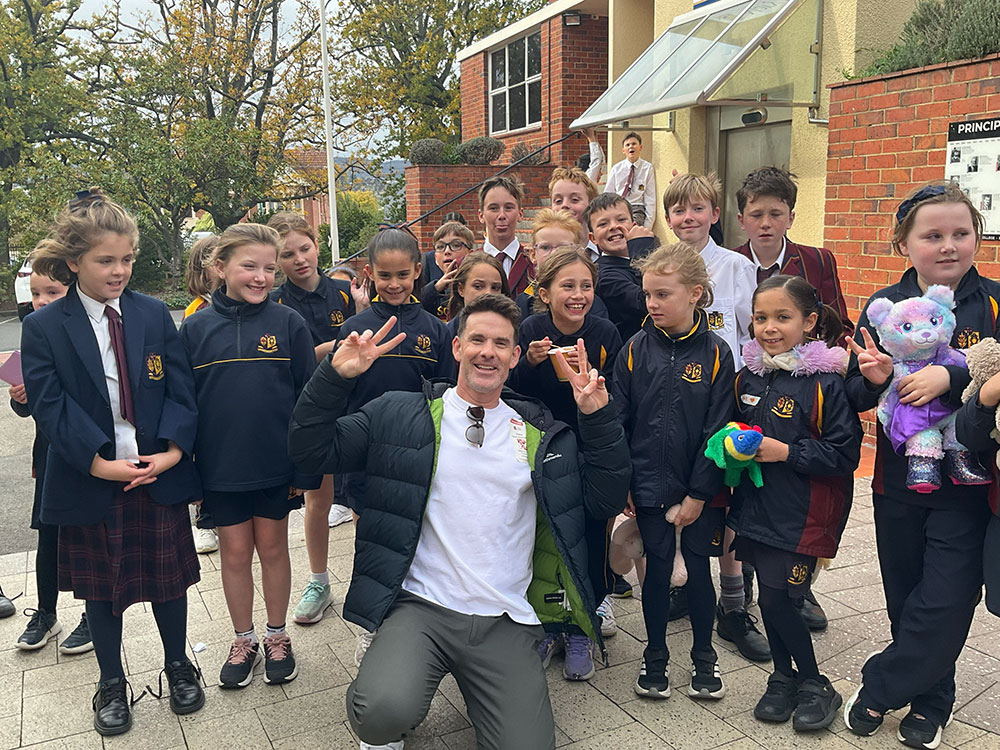
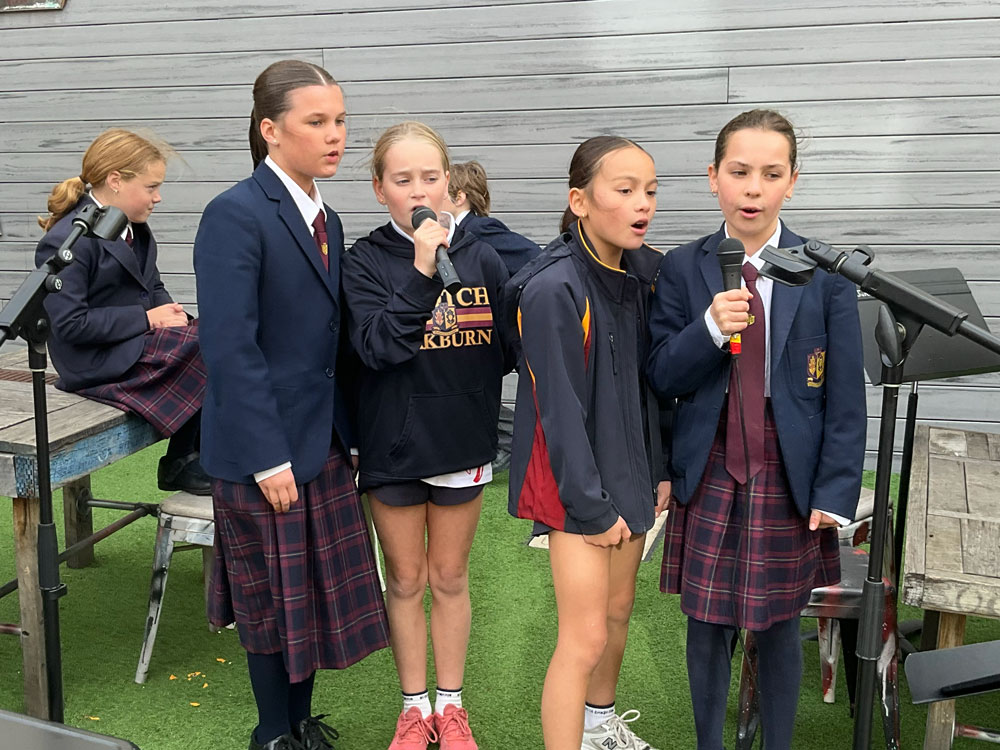
The Elphin Campus celebrated friendships earlier this week, bringing together our student community to strengthen positive connections. These experiences link directly to our College Wellbeing Priorities, which include a focus on building a sense of belonging, parent/carer partnerships and building a positive school culture.
Students from Prep to Year 5 took part in Friendology sessions on Tuesday, learning practical skills and understandings such as the Four Friendship Facts for building positive friendships and what respectful conversations sound like and look like when managing friendship fires and ‘mean on purpose’ behaviour. This shared language between home and school help students build trust and respect in their friendships and navigate these with confidence and care.
Parents/carers also joined in through the Parent/Child Language of Friendship workshop on Monday evening with educator Tyson Greenwood, providing a shared consistent language for supporting friendships at school and at home. We invite you to use this link for free parent resources as part of the College Friendology membership.
There was also plenty of fun during play times, with dancing, karaoke singing, and collaborative art projects that encouraged teamwork, creativity, and celebration of one another.
Across every experience, students strengthened communication, built trust, and deepened their sense of belonging, reminding us that the quality of our friendships are one of the most important influences on our wellbeing and sense of belonging.
Renee Hodgetts
Director of Wellbeing – Elphin
CARDIO ZONE
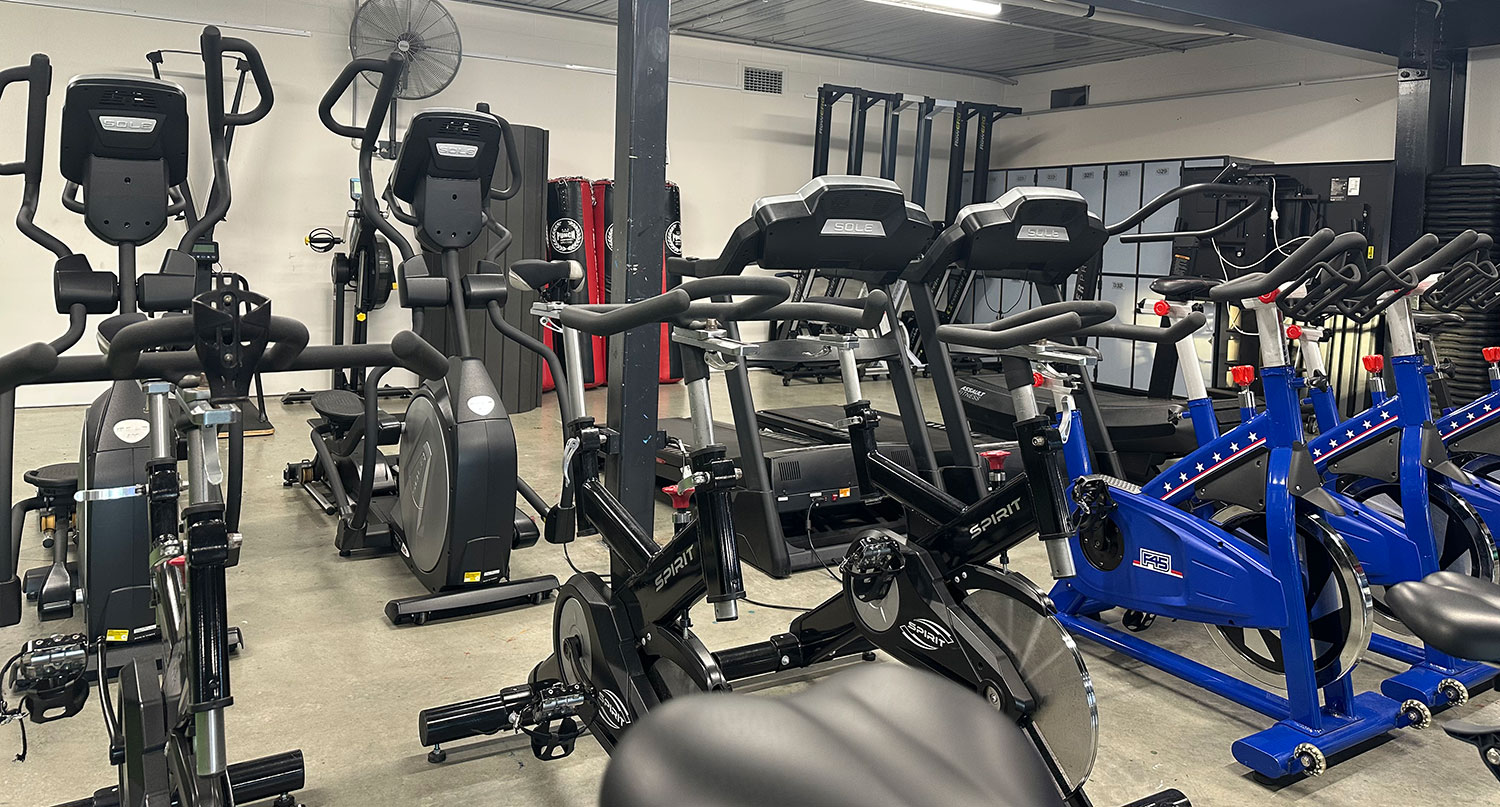
The Cardio Zone is quickly becoming one of the most popular spaces in our community Fitness Centre, offering students, staff, and parents an opportunity to improve both physical fitness and mental wellbeing in a welcoming and motivating environment.
Whether it’s a morning walk on the treadmill, an after-school bike session, or a quick workout before the day begins, cardio training provides enormous benefits for people of all ages and fitness levels. More importantly, it creates a space where movement, energy, and positive habits become part of everyday life within the college community.
Regular cardiovascular exercise is proven to improve heart health, increase energy levels, and build endurance. For students, it can also improve concentration, focus, and academic performance by increasing blood flow and oxygen to the brain. Many students are now using the Cardio Zone not only to stay fit for sport, but also as a healthy outlet to manage stress, improve mood, and build confidence.
For staff and parents, the Cardio Zone offers a chance to prioritise personal wellbeing in a busy schedule. Even short sessions of cardio training can reduce stress, improve sleep quality, and boost mental clarity throughout the day. Exercise is one of the most effective ways to support mental health, helping reduce anxiety while increasing motivation and overall positivity.
The atmosphere within the Fitness Centre continues to grow as a place of connection and encouragement. Students training alongside staff and parents helps strengthen community relationships while promoting a culture of health and wellbeing across the college.
The Cardio Zone includes a range of equipment designed for all abilities and fitness goals, including treadmills, bikes, rowing machines, and ski ergs, there is something for everyone.
The message is simple — movement matters. Whether your goal is fitness, mental wellbeing, recovery, performance, or simply feeling better each day, the Cardio Zone is a space where every member of the college community can benefit.
The Fitness Centre encourages all students, staff, and parents to come in, get moving, and experience the positive impact cardio training can have on both body and mind.
Tim Reese
Fitness Centre Instructor
AUSALERT TESTING IN LAUNCESTON

We would like to make our community aware of the an important test being undertaken in Launceston by the the National Emergency Management Agency (NEMA) on Monday 15 June.
The Australian Government has committed to deliver a public information and warning system prior to the 2026-27 Higher Risk Weather Season (HRWS), known as AusAlert. This system will enable emergency service organisations to deliver emergency and public safety messages to compatible mobile and other devices.
AusAlert will utilise cell broadcast technology, operating independently of traditional mobile networks, eliminating delays caused by network congestion. This ensures it remains a dependable tool for delivering life-saving information when it matters the most.
AusAlert will undertake community-based trials, followed by a national test to ensure functionality. These events will be the first interaction the Australian public has with AusAlert, and the critical alert will be used for both tests.
It will include two (2) alert levels:
• Critical Alert: The highest level of warning. This intrusive alert will have a fixed volume unique alert sound (10.5 seconds), vibration and potentially a flashing light. Users cannot opt-out.
• Priority Alert: Same siren ringtone and vibration. However, users can opt out of receiving alerts.
AusAlert product benefits include:
• Immediate Reach: Alerts are delivered almost instantly to all compatible devices in a targeted area.
• Network Resilience: Cell broadcast is not impacted by network congestion during emergencies.
• Geo-targeted Delivery: Alerts are delivered to a specific geographic area within 160m accuracy.
On Monday 15 June the AusAlert system will undergo a test in Launceston (followed by a national test Monday 27 July). People in the Launceston area on this day will receive a test alert to their phone which will include sound and vibration. We encourage everyone to share this information with those in their own networks to ensure our community is informed and prepared.
Stay Connected

Download The Dash App to stay up to date on information specific to your child, including excursions, permission slips and important dates.

Visit SchoolTV. A parenting wellbeing resource.